

Newsroom·Justice for survivors·News
Partners or Relatives Killed 47,000 Women and Girls in 2025, UN Says
For women and girls around the world, home is still the most dangerous place. New UN estimates released November 24 say partners or family members killed about 47,000 women and girls in 2025, or 129 every day.
 Pastora Tori Matthews
Around 47,000 women and girls were killed by an intimate partner or a family member in 2025, about five every hour, according to new femicide estimates from the UN Office on Drugs and Crime (UNODC) and UN Women. That’s 129 lives a day, Xinhua reported from Vienna as the brief came out on Tuesday, November 24. The UN says the home remains the most dangerous place for a woman or girl.
The total is lower than last year’s estimate of 50,000, but the agencies say that isn’t progress; it mostly reflects better data from individual countries. What the femicide estimates in the report show instead is a pattern that has barely shifted in years, released to mark today’s International Day for the Elimination of Violence against Women and the start of the 16 Days of Activism.
 News · 25 Nov 2026Tasmania Bill Targets Coercive Control and Adds a $500 Offender LevyTasmania's government wants people who commit family violence to help pay for survivors' recovery, and wants its laws to see coercive control for…
 News · 25 Nov 2026South Korea Moves to End Rule That Lets Abuse Cases Be DroppedIn South Korea, a domestic violence case can end when the victim says they don't want the abuser punished, and critics say abusers use that to…
 News · 24 Nov 2026Germany Records Rise in Violence Against Women in Every CategoryGermany's police registered more victims of violence against women in every category its 2025 reports cover, even as violent crime overall fell. A…
 News · 23 Nov 2026Nova Scotia Death Review Says Gun Safeguards Hinge on Police CodingWhen police don't code a call as domestic violence, crucial firearm protections may never start, Nova Scotia's death review committee found after a…
 News · 22 Nov 2026Germany Drafts Law to Punish Femicide as Murder, Not ManslaughterGermany's justice minister says her draft law is ready: a man who kills a woman because she wants to leave him must be punished as a murderer. In…
01
The 2025 femicide estimates at a glance
- How many: Around 47,000 women and girls were killed by an intimate partner or family member in 2025, within an uncertainty range of 37,100 to 56,700.
- How often: An average of 129 a day, or five every hour, UN Women said.
- Share of all killings of women: About 60% of the roughly 78,000 women and girls killed intentionally in 2025.
- Highest rate: Africa, at 2.9 victims per 100,000 women and girls, followed by the Americas (1.4), Oceania (1.1), Asia (0.6) and Europe (0.5).
- Not a decline: The drop from the 2024 estimate of 50,000 largely reflects better data, the agencies said.
- Slow change: From 2010 to 2025, the rate fell 12% in the Americas and 28% in Europe, more slowly than homicide overall.
- The data: The femicide estimates draw on data for 122 countries or territories.
02
The femicide estimates UNODC and UN Women released
The femicide estimates come in a brief titled Femicides in 2025: Global estimates of intimate partner/family member femicides. UNODC’s Research and Trend Analysis Branch prepared it with UN Women’s section on ending violence against women and girls. The UN Women press release, datelined Vienna and New York, calls it the 2026 Femicide Brief.
“For far too long, we have seen alarming statistics,” said Monica Juma, UNODC’s executive director. She said frightening attitudes, social norms and the failure of institutional safeguards create an environment in which killing a wife, daughter, mother or sister comes to be treated as tolerable. She called for prevention aimed at changing harmful attitudes and for specialized programs for perpetrators of domestic violence.
UN Women Executive Director Sima Bahous said, “We must ensure women can report violence safely, access protection, and receive support before it is too late.” She added, “Every missed opportunity to uphold the rights of women and girls to safety is a failure of justice.”
03
What counts as femicide in the femicide estimates
The UN uses the word femicide for the gender-related killing of women and girls. Its Statistical Framework, developed by UNODC and UN Women and endorsed by the UN Statistical Commission in March 2022, sets out three types: killings by intimate partners, killings by other family members, and killings by anyone else that meet at least one of eight criteria for a gender-related motive.
The femicide estimates count only the first two. That’s because data on the third type remains very limited, the report says, and because killings by partners and relatives account for most intentional killings of women and girls.
Intimate partners include current or former spouses, cohabiting partners and dating partners. Other family members include relatives by blood, marriage or adoption, and other household members. Examples in the femicide estimates include killings that grow out of intimate partner violence, so-called honor killings and dowry-related killings.
04
Why the home remains the most dangerous place
Because partners and relatives commit most intentional killings of women and girls worldwide, the femicide estimates conclude that “the home remains the most dangerous place for women and girls in terms of the risk of homicide.”
The numbers show why. Men were an estimated 81% of all homicide victims in 2025, and women 19%. But almost 60% of the women and girls killed were killed by a partner or family member, compared with 11% of men and boys.
That share differed by region. It was highest in Africa, at 75%, followed by Oceania at 57%, Asia at 54%, Europe at 51% and the Americas at 48%.
In the Americas and Europe, the two regions with enough data to say who the killer was, most of these victims were killed by a current or former intimate partner: 70% in the Americas and 63% in Europe. Limited data prevents the same breakdown in the femicide estimates for Africa, Asia and Oceania.
The danger isn’t usually a stranger in the dark. It’s someone with a key to the door, who knows her schedule, her fears and her family. That closeness makes this violence hard to see from outside, and hard to escape from inside.
05
Where the femicide estimates are highest
In the femicide estimates, Africa had the highest number of victims, 22,100, with an uncertainty range of 15,200 to 29,000. Asia followed with 15,100, then the Americas with 7,400, Europe with 2,100 and Oceania with 300.
Worldwide, an estimated 1.1 women per 100,000 female population were killed by a partner or relative in 2025. Africa’s rate was 2.9, the Americas 1.4, Oceania 1.1, Asia 0.6 and Europe 0.5.
The femicide estimates come with a caution. Figures for Africa, Asia and Oceania rest on limited data, and regional rates may mask large differences between subregions and countries. A low regional rate doesn’t mean any one country, city or home is safe.
06
Why the lower number isn’t progress
Last year’s femicide estimates put the 2024 toll at 50,000. The report says the gap to 47,000 is largely explained by better data from individual countries, and that “this difference should not be interpreted as evidence of a decline.” AFP, in reports carried by The Daily Star and South Africa’s The Star, said the estimate has fluctuated between 45,000 and 51,000 over the past several years.
The share is steady too: the brief says the 60% proportion has remained broadly stable over time.
Where trends can be measured, they move slowly. Between 2010 and 2025, the rate fell from 1.6 to 1.4 per 100,000 women and girls in the Americas, a 12% decline, and from 0.7 to 0.5 in Europe, a 28% decline. Overall homicide fell faster, by 23% in the Americas and 43% in Europe. The femicide estimates say that suggests “these crimes are deeply rooted in social norms and gender stereotypes” and points to barriers women face in reaching justice.
07
What the femicide estimates can’t see
The femicide estimates leave out gender-related killings by people outside the family, including killings tied to organized crime, forced labor or trafficking. France and Italy have begun to count those, but the report says it isn’t yet possible to measure them accurately at the regional or global level.
Even the count it does make has gaps. Where countries don’t report, missing values are imputed by a statistical model, so the global and regional femicide estimates should be read as “indicative of the scale of the phenomenon rather than as precise figures,” the brief says. UN Women’s press release adds: “These are only the recorded cases, so the true toll is likely higher.”
The report also highlights a 2025 femicide review from New Zealand. That review noted there’s no routine data there on migrant or refugee status, disability, sexual orientation or gender identity, which “limits the visibility of these groups’ experiences.” It also flagged the heightened homicide risk faced by older women with disabilities or chronic health conditions.
08
Indigenous women and girls
The femicide estimates set aside a section on Indigenous women and girls, whose risk can be far higher than regional numbers suggest. In Australia, a 2024 national analysis found Aboriginal and Torres Strait Islander women experienced homicide at rates up to seven times the national average, and that most were killed by someone they knew.
In Canada, police recorded 44 Indigenous women victims of homicide in 2025, compared with 74 in 2024, though the report says longer-term data still show substantially higher rates than for non-Indigenous women and girls. A New Zealand review estimated that about 25 fewer Māori women and girls would have been killed over the period it examined without the inequities it documented.
In the United States, the femicide estimates cite federal data showing that American Indian and Alaska Native people experience substantially higher homicide rates than non-Hispanic White people, with intimate partner violence named as an important circumstance in killings of Native women. The report calls for data broken down by sex and ethnic identity, so disparities aren’t hidden inside averages.
09
What the femicide estimates say about the United States
The femicide estimates don’t include a count for the United States or for any state. Readers in Oregon, Washington and elsewhere won’t find local numbers in it.
What it does offer is the Americas as a whole: an estimated 7,400 women and girls killed by partners or relatives in 2025, a rate of 1.4 per 100,000, and 70% of those victims killed by an intimate partner. The femicide estimates also cite long-term research from the United States on firearm laws.
That research, covering 1991 to 2015, found that states with laws both barring people under restraining orders from having firearms and requiring them to surrender those weapons had intimate partner homicide rates 14% lower than states without such laws. The brief also cites evidence that a perpetrator’s possession of a firearm significantly raises the odds of a killing. Bloom reported this week on a Nova Scotia death review that found gun safeguards hinge on police coding.
10
The warning signs the report names
“Femicide is rarely an isolated act,” UN Women’s press release says. For many women and girls, it’s the final act in a long pattern of violence, threats and abuse that could have been stopped.
The brief lists risk factors researchers have identified for intimate partner killings:
- A history of violence between the two people, and earlier threats.
- An actual or imminent separation.
- Access to firearms.
- Coercive control and stalking.
- Prior non-fatal strangulation.
- Substance use by the perpetrator, combined with other factors such as a lack of social support.
The report adds that technology-facilitated violence can be part of the control, surveillance and threats that come before a killing. Some findings suggest a foreign woman with little social support may also face added risk when other factors are present.
In Ireland, Sarah Benson of Women’s Aid made the same point to RTÉ News: “Intimate partner femicide rarely comes out of nowhere.” She added, “When a woman tells Women’s Aid that she is afraid for her life, we believe her.”
11
Why so many women never ask for help
Most women who experience physical or sexual violence never seek help from family, their communities or authorities, UN Women says. The brief describes a review of 34 femicide cases in Brazil in which every victim had experienced violence before she was killed, but fewer than a quarter had reported it to police.
That study pointed to shame, guilt and fear of threats, and noted that women who’ve had bad experiences with the justice system may be less likely to report again. Women face greater barriers to justice than men in nearly 70% of the countries surveyed, the brief says.
Under international standards, the report says, “the primary responsibility for initiating investigations and prosecutions lies with the police and prosecution authorities, not with women subjected to violence.” That sentence matters. Safety shouldn’t depend on how loudly a frightened person can ask for it.
12
What the report says prevents femicide
The brief names steps linked to lower risk. Police risk assessments can spot danger and connect victims to services, and protection orders can bar contact, especially when risk assessment is standardized and shared across police, courts, health and social services.
Argentina, France, Norway and Portugal use multi-agency risk-assessment tools; Brazil, Germany and Latvia use electronic monitoring of perpetrators linked to alert devices for women at risk. Femicide reviews, perpetrator programs and legal aid round out the list.
As of 2023, 29 of the 190 countries in a World Bank dataset had laws addressing femicide, most in Latin America and the Caribbean. Bloom has followed that push, from Germany’s draft law to punish femicide as murder to South Korea’s move to end a rule that lets abuse cases be dropped and Tasmania’s bill targeting coercive control.
13
The 16 Days of Activism begin
The 16 Days of Activism run from November 25 to December 10. This year’s UN theme is UNiTE to End Violence Against Women and Girls: Ensure justice, protect survivors, end impunity.
To mark the day, UN Women set out 129 orange flags at UN Headquarters in New York, one for each woman or girl killed by a partner or relative each day. “It is the result of choices, and the world can choose differently,” the agency said.
Human Rights Watch opened the 16 Days warning that women’s rights are being rolled back in many countries. It noted that in March, the Commission on the Status of Women called for strengthening access to justice for all women and girls.
In Ireland, Women’s Aid reported that 13 women have been killed there so far this year, compared with seven last year, and that 57% were killed by a current or former partner, RTÉ reported. The group also planted a National Femicide Memorial Oak in Dublin’s Merrion Square Park.
14
What the femicide estimates mean for survivors
If you’re living with someone who frightens you, these femicide estimates aren’t meant to scare you further. They’re meant to tell the truth: what’s happening to you is real, it’s serious, and it isn’t your fault.
The warning signs aren’t a verdict on anyone’s future. They’re a map for getting help sooner. If you recognize your home in that list, especially a recent separation, threats, stalking or a weapon in the house, that’s a reason to call an advocate today, not a reason to give up.
And if you’ve lost someone, she isn’t just one of 47,000. She had a name, a laugh and people who loved her. Grief that never made the news is still grief, and it deserves a place to rest.
You are seen, and you are loved. Violence at home is never the price of love.
15
Timeline: the femicide estimates and the 16 Days
- March 2022: The UN Statistical Commission endorses the Statistical Framework for Measuring the Gender-Related Killing of Women and Girls.
- 2023: 29 of the 190 countries in a World Bank dataset have laws addressing femicide.
- June 2025: New Zealand publishes a national femicide review.
- 2025: UNODC and UN Women estimate 50,000 women and girls were killed by partners or relatives in 2024.
- November 24, 2026: UNODC and UN Women release their femicide estimates for 2025: about 47,000 victims.
- November 25, 2026: The International Day for the Elimination of Violence against Women; the 16 Days begin, and RTÉ reports new Femicide Watch figures from Women’s Aid in Ireland.
- December 10, 2026: The 16 Days of Activism end.
- 2027: UNODC and UN Women will report to the UN Statistical Commission on how countries are putting the framework into practice.
16
What happens next
The 16 Days of Activism continue through December 10. UN Women and UNODC are calling on governments, the private sector, the media, women’s organizations and survivors to join forces to end femicide.
UNODC and UN Women will report on global use of the Statistical Framework to the UN Statistical Commission in 2027. Testing and capacity work is under way in at least 14 countries, and better national counting should sharpen future femicide estimates, including the killings outside the family that today’s numbers can’t capture.
17
What you can do
- If you’re in danger now, get somewhere safe and contact emergency services where you are.
- Call the National Domestic Violence Hotline. In Oregon and across the United States, an advocate answers at 800-799-7233.
- Take the warning signs seriously. Separation, threats, stalking, coercive control and a firearm in the home are on the list published with the femicide estimates.
- Keep a private record. Note dates, messages and threats, and store them where the person hurting you can’t reach them.
- If you’re supporting someone, believe them first. Don’t push. Let them set the pace, and offer the hotline number.
- If you’re overwhelmed, call or text 988. Someone will answer.
- Use the 16 Days. Share the National Domestic Violence Hotline number and ask local officials how they track killings of women.
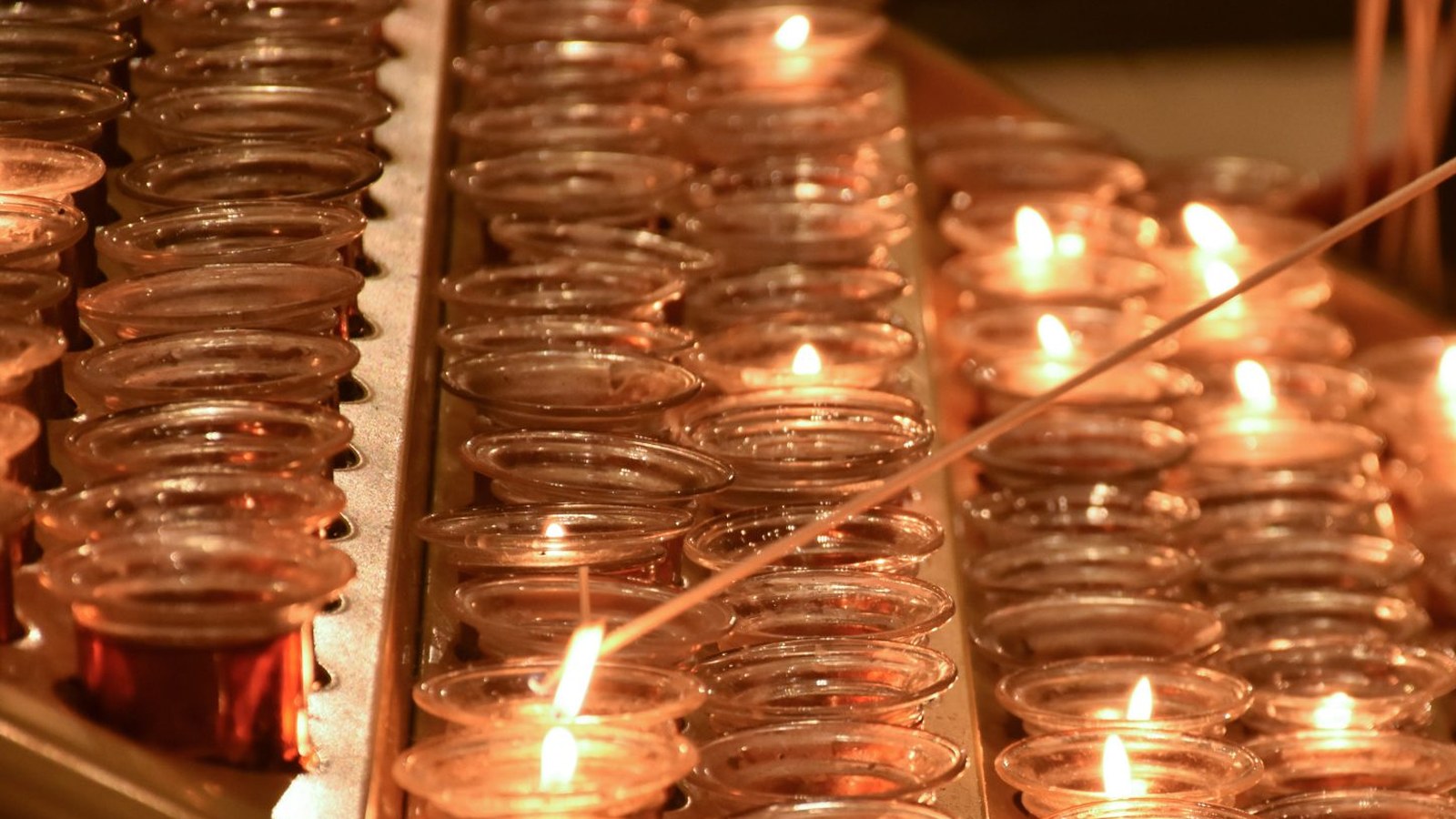
- Remember someone by name. Light a candle, say her name, or check on a friend who has gone quiet.
18
Where to get help in Oregon and across the United States
The National Domestic Violence Hotline is 800-799-7233. RAINN answers at 800-656-4673, Trans Lifeline at 877-565-8860, and 988 answers by call or text.
Bloom’s crisis support page lists more people to call. You can also find Bloom’s support groups if you’d rather not carry this alone.
19
What Bloom is doing
Bloom will follow the laws, reviews and cases that come out of the 16 Days, and we’ll explain each one in plain words. I believe every one of the 129 women and girls killed each day deserved a home that kept her safe.
Faith in Bloom offers pastoral care with no condition attached. That includes anyone grieving a sister, mother or friend, and anyone still deciding whether to leave.
Reading a full research brief so you don’t have to takes time. A monthly gift keeps that work steady, and a one-time gift helps too.
20
Frequently Asked Questions
UNODC and UN Women estimate that around 47,000 women and girls were killed by an intimate partner or family member in 2025. That’s an average of 129 a day, or five every hour.
The count covers intentional killings of women and girls by current or former partners and by family or household members. Gender-related killings by others, such as those tied to trafficking, aren’t included because data is too limited.
No. The 2024 estimate was 50,000, but the agencies say the lower figure in the 2025 femicide estimates largely reflects better data, not an actual decrease.
Africa, at 2.9 victims per 100,000 women and girls, followed by the Americas at 1.4, Oceania at 1.1, Asia at 0.6 and Europe at 0.5.
It doesn’t give a femicide count for the United States. It reports an estimated 7,400 victims across the Americas and cites research from the United States on firearm laws and on higher homicide rates for American Indian and Alaska Native people.
A history of violence, earlier threats, separation, access to firearms, coercive control, stalking and prior non-fatal strangulation are among the risk factors it lists.
The National Domestic Violence Hotline answers at 800-799-7233. You can also call or text 988.
Sovereignty over Servitude. 🌸
Support this work
Everything Bloom publishes is free to read and free to share.
Bloom Ministries is a registered 501(c)(3) in Salem, Oregon. Monthly giving is what lets us say yes before the money is in hand.
Keep reading
 Justice for survivors · 25 November 2026UK Has Only Six Refuge Beds for Trans Survivors of Abuse, Galop FindsJustice for survivors · 25 November 2026Tasmania Bill Targets Coercive Control and Adds a $500 Offender LevyJustice for survivors · 25 November 2026South Korea Moves to End Rule That Lets Abuse Cases Be Dropped

Pingback: Trans Survivors Face Critical Gap: Just 6 UK Refuge Beds