

Newsroom·Legislation·News
Malaysia to Return 6,803 More to Myanmar Days After Genocide Ruling
Malaysia will send thousands more people back to a country the World Court just found committed genocide. Prime Minister Anwar Ibrahim says 6,803 Myanmar nationals will be returned in December, starting with navy ships on December 6 and 7.
 Pastora Tori Matthews
Malaysia will send another 6,803 Myanmar nationals back to Myanmar in December, Prime Minister Anwar Ibrahim told Parliament on Tuesday, November 24, five days after the International Court of Justice ruled that Myanmar committed genocide against the Rohingya. Anwar said 1,500 will sail on three Myanmar naval vessels on December 6 and 7 and 5,303 will be flown home, extending a Myanmar repatriation program that he said has already returned 10,476 people, Malay Mail reported.
Anwar defended the Myanmar repatriation, and last month’s official welcome for Myanmar’s leader, Min Aung Hlaing, as a practical answer to a burden at home, and he said they’re in line with the court’s call for safe and dignified return. A Malaysian human rights society says the ruling points the other way. For the thousands of people on those ships and planes, the question is whether a promise of safety from a state the World Court just found responsible for genocide is enough.
 News · 23 Nov 2026LGBTQ Groups Warn Justices Third-Country Removals Endanger RefugeesSeven LGBTQ legal groups told the Supreme Court on Monday that third-country removals are sending refugees a U.S. judge protected to countries that…
 News · 21 Nov 2026Appeals Court Pauses Order to Bring Man Back From Equatorial GuineaA man protected from torture in Egypt was deported to Equatorial Guinea, where court records say guards beat him. On November 20, an appeals court…
 News · 19 Nov 2026World Court Rules Myanmar Committed Genocide Against the RohingyaFor the first time, the World Court has found a country responsible for genocide. On November 19, the International Court of Justice ruled 9-6 that…
01
The Myanmar repatriation plan at a glance
- Who: 6,803 people Anwar called Myanmar nationals. Malay Mail describes the people being returned as immigration detainees and undocumented migrants.
- When: 1,500 by sea on December 6 and 7, and 5,303 by air during December.
- How: three Myanmar naval vessels, approved by Foreign Minister Mohamad Hasan, and flights paid for by Myanmar’s government.
- So far: 10,476 people returned in the Myanmar repatriation, including 1,476 on a Myanmar naval vessel on September 29.
- The ruling: on November 19, the ICJ found that Myanmar committed genocide against the Rohingya.
- The pushback: the National Human Rights Society, known as Hakam, urged Malaysia to suspend the Myanmar repatriation immediately.
02
What Anwar told Parliament
Anwar spoke during Prime Minister’s Question Time in the Dewan Rakyat, Malaysia’s Parliament. He was asked whether his government regretted inviting Min Aung Hlaing, Malay Mail reported. Free Malaysia Today reported that he was answering Hassan Karim, the member for Pasir Gudang, who asked if the government felt guilty for repatriating Myanmar refugees after the ruling.
“Our decision to extend that invitation was made before the ICJ ruling,” Anwar said. “In deciding policy, the priority is to safeguard national interests.”
He argued that the visit had worked for the Myanmar repatriation. Waiting on other countries had failed, he said, because “relying endlessly on third-country resettlement has not succeeded, and expecting them to be repatriated easily has not happened either.”
Then he tied the Myanmar repatriation directly to the court. “Our engagement is purely pragmatic to resolve the immediate burden on our country,” Anwar said, adding that “the return of these nationals is in line with the ICJ’s call for safe and dignified repatriation.”
Anwar also said Malaysia respected the Rohingya genocide ruling and remained committed to protecting human rights, The Star reported.
03
Who the Myanmar repatriation is sending back
Words matter here, because the law treats a refugee very differently from a migrant. Outlets covering Tuesday’s Myanmar repatriation announcement don’t all use the same ones.
Malay Mail reported that the 10,476 people already returned and the 6,803 due next month are immigration detainees and undocumented migrants. Anwar and The Star called them Myanmar nationals. Myanmar Now called them migrants, and its translation of Anwar’s words calls them Myanmar citizens.
Free Malaysia Today, describing the same exchange, called them refugees and said Anwar noted that the decision to send the refugees home was made before the ruling. The Deccan Chronicle reported that Anwar said Malaysia would keep working with Myanmar’s leadership to facilitate the repatriation of refugees.
In October, Min Aung Hlaing said Myanmar citizens held at Malaysian immigration detention centers would be brought back as soon as possible, CNA reported. Malaysia isn’t a party to the UN refugee convention and treats asylum-seekers as illegal migrants, CNA noted, which helps explain why the labels in Myanmar repatriation reporting blur.
None of the reports Bloom reviewed said whether any Rohingya are among the 6,803, and Bloom won’t guess.
04
The Myanmar repatriation schedule for December
Foreign Minister Mohamad Hasan approved three Myanmar naval vessels to carry 1,500 Myanmar nationals home on December 6 and 7, The Star reported. Another 5,303 will be flown home at the Myanmar government’s expense.
The 10,476 people already returned included 1,476 who were taken home aboard a Myanmar naval vessel on September 29, The Star reported, with the costs fully borne by the Myanmar government. Myanmar Now reported that the late-September sailing was part of an opaque scheme that rights groups have raised concern about.
Those are big numbers, and each one is a person with a name, a family and a reason for leaving. The Myanmar repatriation schedule gives them dates. It doesn’t tell them what they’re going home to.
05
What the World Court ruled on November 19
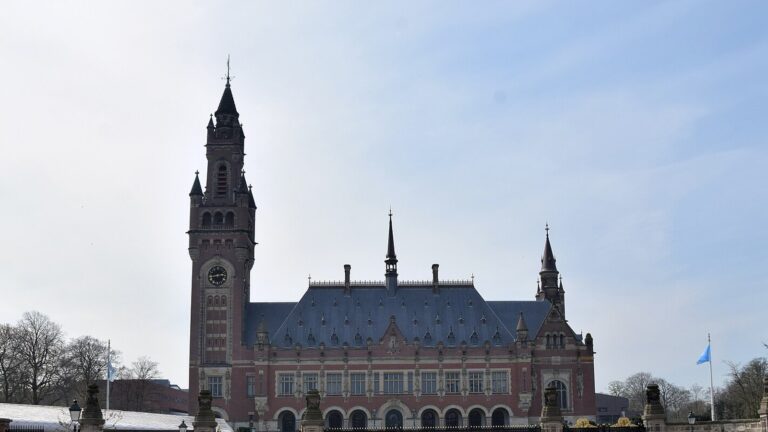
The International Court of Justice, the UN’s top court, delivered its verdict on Thursday, November 19, seven years after the West African country of Gambia brought the case against Myanmar, CNA reported. In a nine-to-six majority ruling, the judges found that Myanmar had committed genocide against the mostly Muslim minority. It’s the first time the ICJ has held a state accountable for genocide.
The court found that Myanmar had the “intention to destroy” a substantial part of the Rohingya population during its military crackdown in 2017, meeting the legal threshold for genocide, CNA reported. It also found that villages had been “systematically destroyed,” with permanent structures built in their place and non-Rohingya people resettled there.
The military’s 2017 “clearance operations” killed thousands and forcibly displaced hundreds of thousands more, Malay Mail reported. Bloom covered the Rohingya genocide ruling the day it came down: the World Court ruled Myanmar committed genocide against the Rohingya.
Myanmar’s government has criticized the ruling as unfair. A government spokesperson, Khaing Khaing Soe, told reporters in Naypyitaw that “it is not fair,” CNA reported.
06
What the court ordered Myanmar to do
The ICJ ordered Myanmar to halt all acts of violence against the Rohingya, investigate those responsible and make sure such atrocities never happen again, CNA reported. It ordered restitution and reparations for victims, including allowing Rohingya refugees to return home safely and helping families reunite.
Malay Mail reported that the court also ordered property restitution, protection against discrimination and persecution, and the prosecution of those suspected of involvement in genocide.
On return, the court’s words were specific. Myanmar must “allow and facilitate the safe, voluntary and dignified return” of refugees displaced either within Myanmar or abroad, Myanmar Now reported.
Myanmar must report to the court within two years on what it has done, CNA reported, and the amount of compensation will be decided later. The judgment is final and can’t be appealed. But the court has no way of its own to enforce it, and if Myanmar refuses, Gambia could take the matter to the UN Security Council under Article 94 of the UN Charter, associate law professor Vincent-Joel Proulx of the National University of Singapore told CNA.
07
Why “voluntary” is the word that matters
Set the two sentences on the Myanmar repatriation side by side. Anwar, as Malay Mail reported his words, spoke of “safe and dignified repatriation.” The court’s order adds a third word: voluntary.
Malay Mail drew the same line in its own reporting. The ICJ’s November 19 judgment addressed the voluntary, safe and dignified return of displaced Rohingya, it noted, rather than the deportation of Myanmar nationals from other countries.
Hakam made the point more sharply. “Hakam emphasises that the ICJ recognition of the right to return must not be misconstrued as a basis for immediate repatriation,” its president, M. Ramachelvam, said in a statement on Tuesday.
Before the Myanmar repatriation news broke, a regional scholar was already saying the same thing. “The ruling gives a firmer legal basis for host countries to ensure safe, voluntary and dignified return,” Moe Thuzar of the ISEAS-Yusof Ishak Institute told CNA. The priority, she said, is to make sure “any repatriation is genuinely safe and voluntary, and not rushed.”
A right to go home isn’t a duty to be sent there. That’s the whole difference between a door held open and a door someone is pushed through.
08
Anwar defends hosting Min Aung Hlaing
Min Aung Hlaing was commander-in-chief of Myanmar’s military during the 2017 crackdown, Malay Mail reported. He led the 2021 military coup against a democratically elected government and became president in April after an election that Western nations and rights groups widely criticized as a sham, CNA reported in October. In 2024, prosecutors at the International Criminal Court requested an arrest warrant for him over alleged crimes against humanity involving the persecution and deportation of the Rohingya, CNA reported.
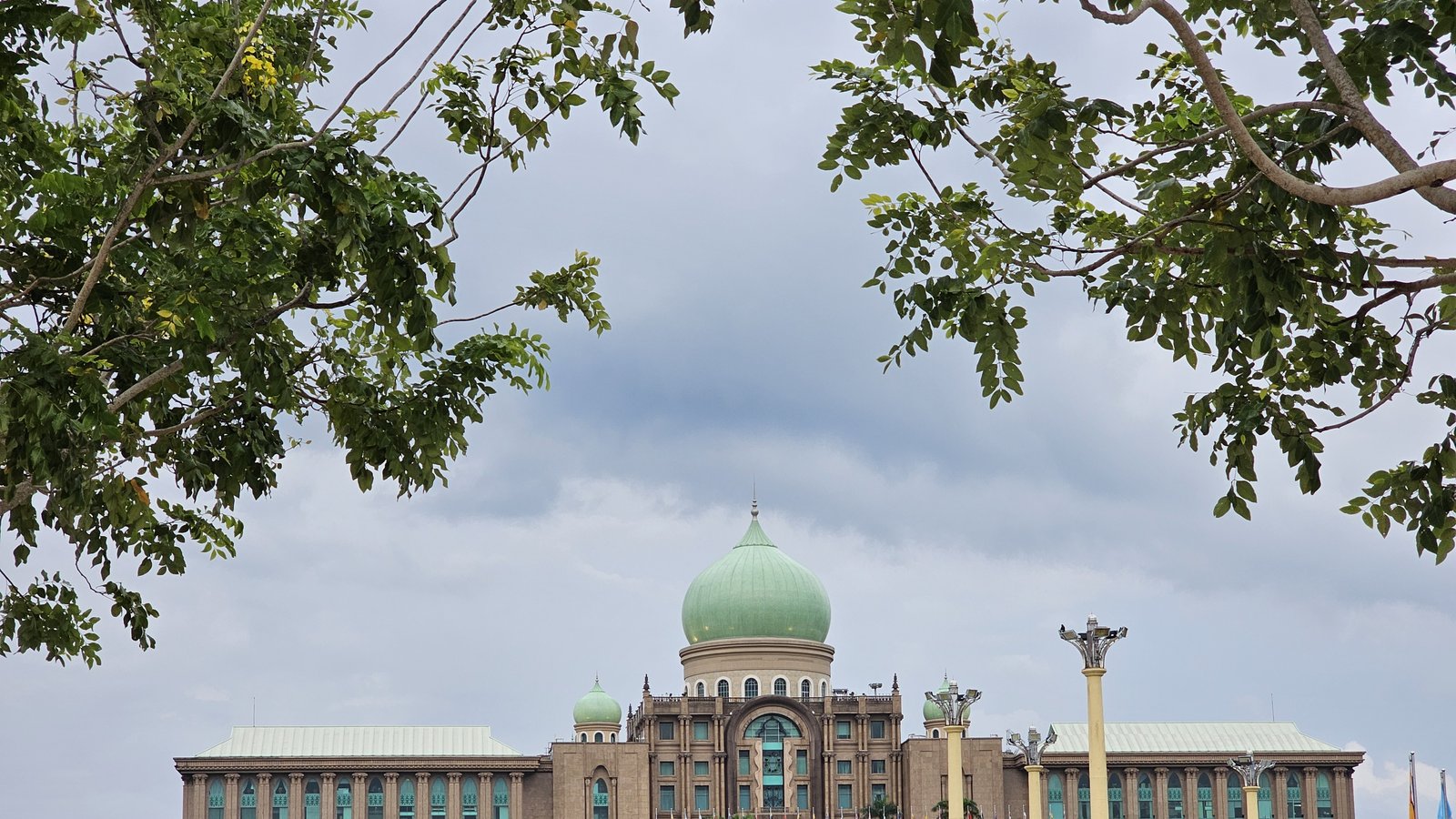
During his visit last month, Min Aung Hlaing received an official welcome in Putrajaya, including a guard of honor and an official luncheon, Malay Mail reported. The Malaysian government called him Myanmar’s “President” and pledged to help facilitate Myanmar’s reintegration into ASEAN, even though the regional bloc has long restricted the junta’s representation at its summits.
Anwar insisted on Tuesday that hosting Min Aung Hlaing wasn’t formal recognition of the junta as Myanmar’s legitimate government. He said Malaysia hadn’t abandoned its objections to the treatment of the Rohingya and remains committed to ASEAN’s Five-Point Consensus to address the crisis, Free Malaysia Today reported.
He also described the roughly 200,000 Myanmar nationals who fled to Malaysia as victims of “the regime’s cruelty,” FMT reported. Anwar Ibrahim’s government says it can object to that cruelty and still carry out the Myanmar repatriation. Hakam says the difficulties of hosting refugees can’t justify returning people to circumstances where their safety remains uncertain.
09
Rights groups urge a halt to the Myanmar repatriation
Hakam, the National Human Rights Society, called on Malaysia to immediately suspend the repatriation of refugees and asylum seekers from Myanmar, The Star reported. Its president said the November 19 judgment must not be read as evidence that Myanmar is now safe for refugees to return.
Malaysia should hold off on the Myanmar repatriation until there’s credible, independently verifiable evidence that Myanmar has taken meaningful steps to comply with the judgment, Hakam said. Although the ruling concerned the Rohingya, other ethnic and religious minorities in Myanmar also face persecution, and Malaysia must assess the risks for every refugee and asylum seeker regardless of ethnicity or religion, it added.
Any future repatriation must be voluntary, based on free and informed consent, Hakam said. “No individual should be returned to a country where their safety, dignity and fundamental rights cannot be guaranteed,” Ramachelvam said.
Human Rights Watch and other human rights organizations have warned that forced returns to Myanmar could violate the principle of non-refoulement, citing risks of arbitrary detention, forced military conscription and persecution, Malay Mail reported. Back in October, CNA reported that the Myanmar repatriation had been widely criticized by the United Nations and rights groups concerned about the risks of an ongoing civil war.
10
Safety promises and reports of detention
Anwar said Malaysia had obtained assurances that those sent home in the Myanmar repatriation would be allowed to return safely and with dignity. “Thus far, there have been no cases among the 10,476 who faced any form of pressure, based on Malaysian monitoring,” he said, according to The Star.
Myanmar Now reported a different thread. In late October, Kuala Lumpur said it would seek clarification from Myanmar over reports that hundreds of migrants recently returned to the country were being held in military detention. Anwar didn’t mention that request when he defended the Myanmar repatriation on Tuesday, Myanmar Now reported.
In Myanmar’s Rakhine State, conflict continues between the junta and the Arakan Army, amid continued violence against Rohingya civilians, CNA reported after the ruling.
Bloom can’t verify the conditions anyone in the Myanmar repatriation will meet on arrival. That’s exactly why Hakam asks for evidence that can be checked independently, not only diplomatic assurances.
11
Malaysia’s refugees: numbers, registration and resettlement
Counts that frame the Myanmar repatriation differ by source. Anwar said Malaysia hosts close to 200,000 refugees from Myanmar, including Rohingya and members of other ethnic groups, The Star reported. In October, CNA cited the UN refugee agency’s count of more than 193,000 refugees and asylum seekers from Myanmar, about 65% of them Rohingya. Myanmar Now, citing the UN, put the Rohingya at two-thirds of 190,000.
A lawmaker, Mohd Isam Mohd Isa, cited UNHCR statistics as of August showing 225,740 registered refugees and asylum seekers in Malaysia, about 90% of them Myanmar nationals, The Star reported.
On Tuesday, Anwar also said the Cabinet had decided that refugee registration will be recognized only when carried out by the Immigration Department and Home Ministry, instead of UNHCR. “If we recognise all of them as refugees, the country cannot be managed properly,” he said.
Resettlement abroad has stalled too. Anwar said Turkey wasn’t prepared to consider taking 10,000 Rohingya refugees from Malaysia, following an announcement by his deputy, Ahmad Zahid Hamidi, that was later rowed back, Myanmar Now reported.
12
Why non-refoulement is a matter of conscience
Non-refoulement is the principle that prohibits returning people to countries where they face a real risk of persecution, torture or other serious human rights violations, as Hakam described it.
The Myanmar repatriation tests that principle in a hard place. Malaysia shelters one of Southeast Asia’s biggest refugee populations, Myanmar Now noted, and Anwar Ibrahim has a point that resettlement abroad hasn’t kept pace. Public sentiment in Malaysia has turned in recent years, with Rohingya facing increasing harassment amid a surge of online hate speech and misinformation, CNA reported, and AFP fact-checkers have found Rohingya refugees targeted by disinformation campaigns, Myanmar Now reported.
But a burden doesn’t change what’s true on the other side of a border. The same principle is being tested far from Southeast Asia. On Monday, Bloom reported that LGBTQ groups warned the Supreme Court that third-country removals endanger refugees.
Every faith that has ever told a story of exile knows this one. A stranger who fled isn’t cargo to be shipped back when the host grows tired. They’re a neighbor whose safety is now, in part, our responsibility.
13
A timeline of the Myanmar repatriation
- 2017: Myanmar’s military carries out “clearance operations” against the Rohingya, killing thousands and displacing hundreds of thousands, Malay Mail reports.
- Seven years before the ruling: Gambia brings its genocide case against Myanmar at the ICJ.
- 2021: Min Aung Hlaing leads a military coup; ASEAN leaders agree on the Five-Point Consensus in April.
- 2024: International Criminal Court prosecutors request an arrest warrant for Min Aung Hlaing.
- April 2026: Min Aung Hlaing becomes president after a widely criticized election.
- September 29: 1,476 Myanmar nationals are returned on a Myanmar naval vessel.
- October 8: Anwar meets Min Aung Hlaing in Putrajaya and pledges continued cooperation on repatriation.
- Late October: Malaysia says it will seek clarification over reports that returnees are being held in military detention.
- November 19: The ICJ rules that Myanmar committed genocide against the Rohingya.
- November 24: Anwar tells Parliament the Myanmar repatriation will return 6,803 more in December; Hakam urges a suspension.
- December 6 and 7: 1,500 are scheduled to sail on three Myanmar naval vessels, with 5,303 more to fly during December.
14
What happens next
The next Myanmar repatriation sailings are set for December 6 and 7, with flights to follow during December, Anwar said. Hakam has asked for the opposite: a pause until there’s credible, independently verifiable evidence that Myanmar is complying with the ruling.
Myanmar now has two years to report to the ICJ on the steps it has taken, CNA reported. Moe Thuzar told CNA that the two-year deadline gives the international community, and ASEAN, a clear benchmark for measuring Myanmar’s response.
Watch, too, how Malaysia carries out its new rule on refugee registration, which moves recognition away from UNHCR to the Immigration Department and Home Ministry.
Bloom will follow the Myanmar repatriation, any response from UNHCR or ASEAN, and any word on what happens to the people returned in December.
15
What you can do
- Take care of yourself first. If this news stirs fear for family abroad or old memories of displacement, call or text 988, or visit Bloom’s crisis support page to find someone to talk with at any hour.
- Learn the words. Refugee, asylum seeker, migrant and detainee mean different things in law. When you read about the Myanmar repatriation, notice which word a source uses and why.
- Share careful reporting. Rohingya refugees have been targeted by disinformation, so pass along established outlets and rights groups, and check before you repost.
- Follow the documentation. Hakam, Human Rights Watch and UNHCR publish what they find about the Myanmar repatriation.
- Tell your representatives what you think. Whatever your politics, your government decides how refugee protection figures in foreign policy.
- Pray for the people on those ships and planes. Hold them, their families and the Rohingya still waiting for justice in your prayers.
16
Where to get help
If you or your family fled war or persecution, news of the Myanmar repatriation can reopen wounds you thought had closed. Call or text 988 any time, day or night.
Bloom’s crisis support page lists more lines you can call. Faith in Bloom offers pastoral care with no condition attached.
17
What Bloom is doing
Bloom reports on civil rights wherever they’re tested, because the right to safety doesn’t end at a border. The Bloom Charter is our global declaration that every person’s life, body and conscience belong to them, and the Myanmar repatriation is the kind of story it was written for.
I believe no one should be sent back to danger to ease someone else’s burden. A monthly gift keeps this reporting going week after week, and a one-time gift helps too.
18
Frequently Asked Questions
Anwar Ibrahim told Parliament that the Myanmar repatriation will return 6,803 Myanmar nationals in December. Of those, 1,500 are to sail on three Myanmar naval vessels on December 6 and 7, and 5,303 will be flown home at the Myanmar government’s expense.
Malay Mail describes the people being returned as immigration detainees and undocumented migrants. Anwar calls them Myanmar nationals, while other outlets call them migrants or refugees. No report Bloom reviewed said whether any Rohingya are among them.
On November 19, the International Court of Justice ruled by nine votes to six that Myanmar committed genocide against the Rohingya. It ordered Myanmar to allow and facilitate the safe, voluntary and dignified return of displaced Rohingya, among other steps.
Anwar says the returns are in line with the court’s call for safe and dignified repatriation. Malay Mail noted that the judgment addressed the voluntary return of displaced Rohingya, not deportations from other countries, and Hakam says the ruling isn’t a basis for immediate returns.
It’s the principle that prohibits returning people to countries where they face a real risk of persecution, torture or other serious human rights violations. Human Rights Watch has warned that forced returns to Myanmar could violate it.
Myanmar’s government called the ruling unfair. The judgment is final and can’t be appealed, and Myanmar has two years to report on the steps it has taken.
Sovereignty over Servitude. 🌸
Support this work
Everything Bloom publishes is free to read and free to share.
Bloom Ministries is a registered 501(c)(3) in Salem, Oregon. Monthly giving is what lets us say yes before the money is in hand.
Keep reading
 Arizona Legislature · 25 November 2026Appeals Court Says Arizona Judges Can’t Bar Reports From Open Court
 Massachusetts Legislature · 24 November 2026Judge Bars Plymouth’s Insurance Demand but Says Town Owes No Stage
 Legislation · 24 November 2026DOJ Taps Civil Rights Lawyers to Fight Detainees’ Habeas Petitions
