

Newsroom·Legislation·News
Iran Flogs Singer Parastoo Ahmadi Over a Concert Without a Hijab
Iran punished a woman for singing with her hair uncovered. On November 23, singer Parastoo Ahmadi and four of her concert team each received 74 lashes over a 2024 YouTube concert, plus two-year bans on music and travel.
 Pastora Tori Matthews
Singer Parastoo Ahmadi and four members of her concert team each received 74 lashes in Iran on Monday, November 23, over an online concert she sang without the mandatory hijab, their lawyer said. A court had convicted the five of “offending public decency by producing and publishing obscene and immoral content online,” and barred them from artistic work and travel for two years, Reuters reported.
The punishment turns two of the most personal choices a woman can make, what she wears and whether she sings, into matters for a criminal court and the lash. For anyone who believes faith can’t be forced and art can’t be licensed, the Parastoo Ahmadi case asks what freedom of expression and freedom of conscience are worth when a state enforces religious dress with corporal punishment.
 News · 22 Nov 2026Kelantan Charges Trans Woman With 'Posing as a Woman' Over a KaftanA trans woman in Kelantan, Malaysia, pleaded not guilty Sunday to "posing as a woman" by allegedly wearing a long kaftan, a charge that carries up to…
 News · 19 Nov 2026Judge Blocks Brooke Rollins' Religious Emails to USDA StaffFederal workers can't be pressured to share the boss's faith. A judge ruled Thursday that Agriculture Secretary Brooke Rollins' Easter and Christmas…
01
The Parastoo Ahmadi case at a glance
- Who: Parastoo Ahmadi, a 29-year-old Iranian singer of traditional songs, and four members of her concert team.
- What: 74 lashes each, carried out Monday, November 23, 2026, plus two-year bans on artistic and musical work and on travel.
- Where: the Sentence Enforcement Unit of the Qom Prosecutor’s Office, in the city of Qom.
- Why: a concert filmed in December 2024 and posted on YouTube, in which she sang with her hair uncovered alongside male musicians.
- The charge: “offending public decency” through online content the court called obscene and immoral.
- The courts: a conviction in June, upheld on appeal in September.
- Iran’s response: authorities didn’t immediately comment.
02
What happened in Qom on Monday
Parastoo Ahmadi and the four others were punished at the Sentence Enforcement Unit of the Qom Prosecutor’s Office, CNN reported, citing defense attorney Mostafa Nili through the rights group Iran Human Rights. Iran Human Rights shared the news on X.
CNN described the other four as the concert’s organizer and three musicians. A member of the defense team told the BBC that Parastoo Ahmadi, three musicians who performed with her and her producer received the lashes in Qom, Al-Monitor reported. Bloom isn’t naming the four team members.
The news came through Iran Human Rights and Emtedad, a pro-reformist news website, both quoting Nili, Reuters reported. The ISNA news agency, citing her lawyer, also reported that the punishment was carried out on Monday, according to a post by L’Orient-Le Jour that Al-Monitor cited.
Bloom reports the sentence and the law behind it. We won’t describe the punishment itself, because the people who received it deserve their dignity more than readers need the details.
03
The charge: offending public decency
The Qom criminal court convicted the group of “offending public decency through the production and publication of vulgar and immoral content in cyberspace,” The Telegraph reported. Reuters translated the same charge as producing and publishing obscene and immoral content online.
Look closely at what that charge says. It doesn’t accuse anyone of hurting anyone. The “content” was a woman singing, in a sleeveless dress with her hair uncovered, CNN reported, in a historic building with no audience at all.
Shortly after the video came out, Iran’s judiciary-affiliated Mizan News Agency said authorities had opened a case against Parastoo Ahmadi and members of the production team over what it called an “illegal concert,” CNN reported. Mizan said the performance didn’t comply with the country’s “legal and religious standards.”
That last phrase matters. The state’s own judiciary-linked outlet tied this prosecution to religious standards. Whatever else it is, the Parastoo Ahmadi case is about compelled religious dress, enforced by the criminal law.
04
A two-year ban on music and travel
Besides the lashes, the five received two-year bans on artistic and musical activities and on travel, Reuters and CNN reported. CNN specified that the travel ban covers foreign travel.
The court didn’t only punish what Parastoo Ahmadi did once. It reached forward into what she may do next.
For a working singer, a ban on musical activity silences the very thing the court punished. Parastoo Ahmadi sings traditional Iranian songs and has more than 77,000 subscribers on YouTube, Al-Monitor reported. The concert remains available on her channel, where Al-Monitor counted more than 3.3 million views.
The travel ban closes the other door. Singing in public by solo women has been banned in Iran since the 1979 Islamic Revolution, forcing many women vocalists to leave the country, perform only at private gatherings or fall silent, The Telegraph reported. For the next two years, leaving isn’t an option for her.
05
Where the concert was filmed
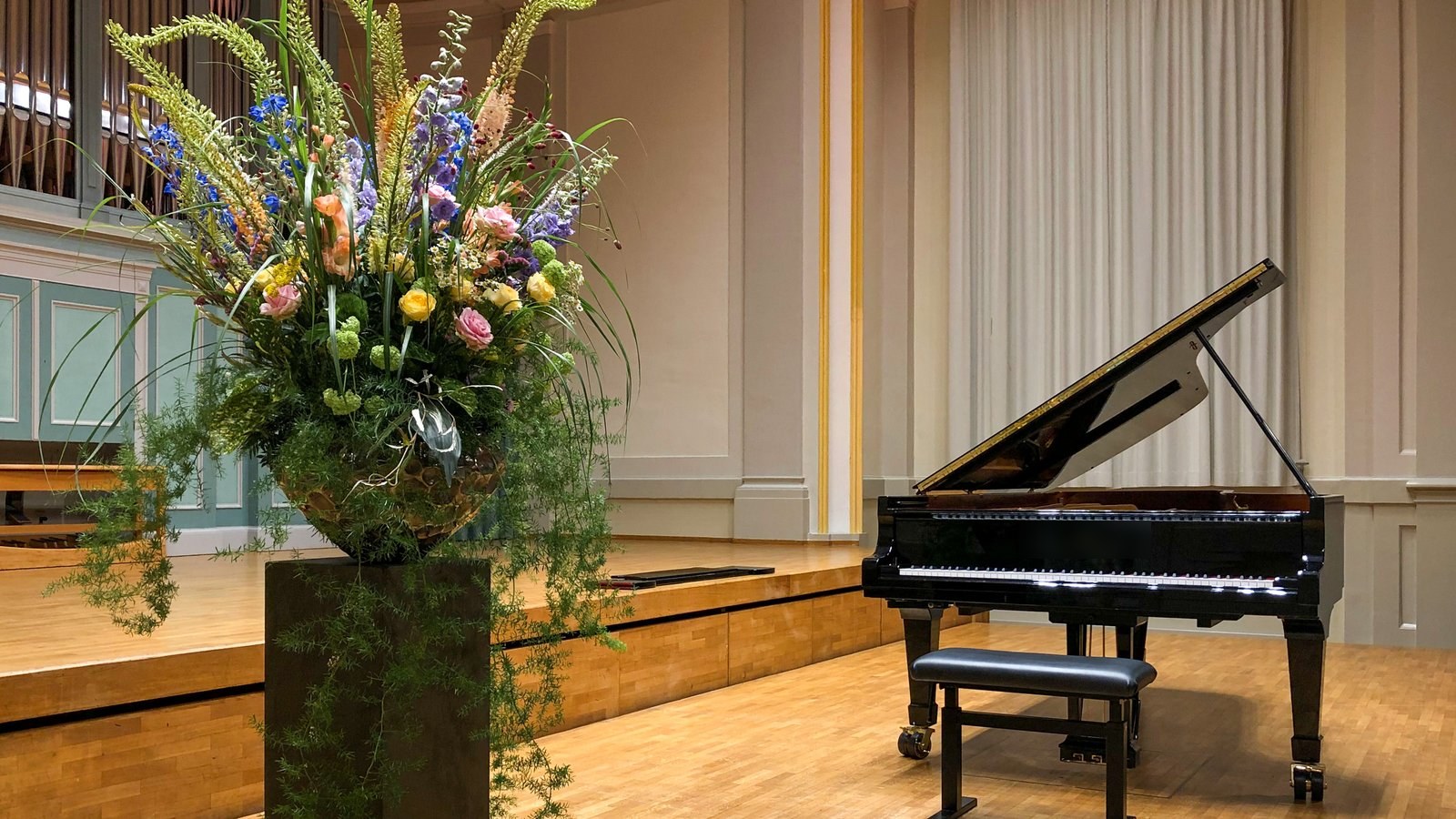
The concert was filmed in December 2024 at the historic Deir-e Gachin Caravanserai near Qom, CNN reported. A caravanserai is an old fortified waystation built for travelers and traders. Qom is a Shiite holy city, home to numerous Islamic seminaries and considered a bastion of religious conservatism, CNN noted.
There was no live audience. The video showed Parastoo Ahmadi singing alongside male musicians, CNN reported, and The Telegraph said it came to be known as the imaginary concert. She sang nine Persian songs.
Hengaw, a Norway-based human rights group, said the video was released on YouTube in December 2024 and showed her performing without the mandatory hijab alongside male musicians in Qom, south of Tehran, Reuters reported. Al-Monitor and the defense team member who spoke to the BBC also placed the concert in Qom.
06
What Parastoo Ahmadi said about singing
Parastoo Ahmadi framed her performance as an act of defiance, The Telegraph reported. When she released the video, she wrote: “I am Parastoo, a girl who wants to sing for the people I love.” She added: “This is a right I could not ignore.”
She called it a right. The court called it a crime. Between those two words sits the whole question of freedom of expression: whether a person’s voice belongs to her, or to the state that licenses it.
People heard her. Residents in Tehran said her voice had “taken over” the city, playing in taxis, cafes and on the streets when the concert went online, The Telegraph reported.
07
How the case moved through Iran’s courts
Parastoo Ahmadi was arrested in December 2024, shortly after the concert, and quickly released, Iran International reported, according to Al-Monitor. The Telegraph reported she was briefly detained in the northern city of Sari after the video appeared and released hours later after widespread public anger.
A criminal court in Qom convicted her, The Telegraph reported, and Al-Monitor said the conviction came in June. An appeals court upheld the ruling in September, CNN reported, and The Telegraph said the Qom appeals court then sent the file for enforcement.
That’s nearly two years from a song to a sentence carried out against Parastoo Ahmadi. Through all of it, the concert stayed online.
08
Why Iran Human Rights says it’s about more than clothing
Mahmood Amiry-Moghaddam, director of Iran Human Rights, told CNN that Parastoo Ahmadi’s clothing was an important factor in the punishment. But he said the prosecution also related to her singing in public and, more broadly, to her challenge to Iranian authorities.
That fits what other reporting shows. Hamid Reza Nourbakhsh, head of Iran’s House of Music, a nonprofit, criticized the lack of any clear framework for women performers, The Telegraph reported. He said there was no explicit religious ruling forbidding women’s singing, and that the matter should be settled “once and for all.”
So three things were on trial in Qom: her clothes, her voice and her refusal to be quiet. The mandatory hijab was the most visible of the three, but it wasn’t the only one.
09
What Amnesty International and Iran say
Amnesty International has described flogging as a cruel, inhuman and degrading punishment, CNN reported. In a report last year, Amnesty International accused Iranian authorities of increasingly using arbitrary detention, prosecution and flogging against singers, journalists and women’s rights activists who challenge compulsory veiling.
In October, Amnesty International called on Iranian authorities to halt any plans to flog Parastoo Ahmadi and the others involved in the concert, The Telegraph reported. Weeks later, the sentences were carried out.
Western governments and human rights groups have criticized flogging as torture and a violation of international law, Reuters reported. Iran rejects accusations over its human rights record and says Western countries should focus on their own human rights problems. Iranian authorities didn’t immediately respond to Reuters or comment to CNN.
10
The mandatory hijab law and the 2022 protests
Iranian law has required women to cover their hair and wear loose-fitting clothing in public since the 1979 revolution, Al-Monitor reported. Enforcement has been inconsistent, and many women now go without headscarves, particularly in Tehran.
The rules became a flashpoint during protests in 2022 after the death in custody of Mahsa Amini, a Kurdish Iranian woman who had been arrested for allegedly violating the dress code, Reuters reported. Since then, the rules have increasingly been flouted on the streets of Tehran and beyond, and enforcement has become more selective.
Adherence to the mandatory hijab law has decreased since 2022, Al-Monitor reported. Agence France-Presse reported in April that it’s becoming increasingly common in parts of Tehran and other cities to see women out in public without a head covering.
11
Enforcement is rising as compliance falls
Iran’s government hasn’t let go of the law. Gholam-Ali Haddad-Adel, a former parliament speaker, said in September that “war conditions” are keeping authorities from enforcing the hijab law as strictly as they’d like, Al-Monitor reported. But lax compliance predates the war; AFP reported in December 2025 that more women were appearing in public without hijabs.
Officials have said over the past year that they plan to step up enforcement. In late October, Tehran prosecutor Ali Salehi threatened “decisive and deterrent measures” against government entities that fail to enforce the hijab rules, according to IranWire, which cited the judiciary. He spoke at a meeting of the government’s Chastity and Hijab Task Force, Al-Monitor reported.
In October 2025, an Iranian official announced the deployment of 80,000 personnel to Tehran province to make sure women were complying, a force that included educators and judicial officers. Against that record, the Parastoo Ahmadi case reads as a signal, not an accident.
12
Other artists punished for their songs
Parastoo Ahmadi isn’t the first. Singer Mehdi Yarrahi was arrested in 2023 for releasing a song that encouraged Iranian women to take off their head coverings, and he was released on bail later that year, Al-Monitor reported. Singer Zara Esmaeili was arrested in 2024 for singing on camera in public without her hijab; she’s now based in France, according to Iranian media.
Singer Hiva Seyfizadeh was sentenced by a lower court to four years in prison on a morality charge after performing traditional Iranian music in Tehran in February 2025, CNN reported. She said in a video in August that she sang only several verses by the 13th-century Persian poet Saadi Shirazi, and she intends to appeal.
The pattern is plain. The law reaches past what women wear to whether they may be heard at all.
13
Outrage at home and online
The flogging sparked outrage on social media, with artists, activists and other users condemning the punishment and denouncing restrictions on women’s artistic expression in Iran, Iran International reported. Iran International is a London-based outlet, Al-Monitor noted.
Public anger has shaped this case before. When Parastoo Ahmadi was detained in December 2024, she was released within hours after widespread public anger, The Telegraph reported. This time, the anger came after the sentence was already carried out. It can’t undo Monday’s punishment, but it tells the five that people saw and that they aren’t alone.
14
Why compelled religious dress is a matter of conscience
Many women wear the hijab freely, as an act of faith and devotion. Their right to do so deserves full protection, and religious liberty that doesn’t protect them isn’t religious liberty. The same principle protects the woman who chooses not to cover.
What changes everything is compulsion. When a government makes a religious garment mandatory and enforces it through criminal courts and corporal punishment, it doesn’t produce faith. It produces fear, and it puts the state’s hand where only conscience belongs.
It’s also a question of women’s rights. The mandatory hijab law is written for women, and the ban on public singing falls on solo women vocalists. The musicians who played beside Parastoo Ahmadi received the same sentence she did, but the law that started this case was aimed at her hair and her voice.
That principle isn’t foreign to readers in the United States. Last week, a federal judge ruled that a cabinet secretary’s religious emails to all USDA staff likely violated the Establishment Clause, as Bloom reported. The scale is nothing alike, but the line is the same: government doesn’t get to press faith on people. And on Sunday, Bloom reported that the Malaysian state of Kelantan charged a trans woman over the clothes she wore, another case where a rule about clothing became a criminal charge.
15
A timeline of the Parastoo Ahmadi case
- 1979: After the Islamic Revolution, Iranian law requires women to cover their hair in public, and solo singing by women in public is banned.
- 2022: Protests sweep Iran after Mahsa Amini dies in custody following an arrest under the dress code.
- December 2024: Parastoo Ahmadi releases her concert on YouTube, is briefly detained and is released. Mizan says a case has been opened.
- October 2025: An Iranian official announces 80,000 personnel for hijab enforcement in Tehran province.
- June: A criminal court in Qom convicts Parastoo Ahmadi and four members of her team.
- September: An appeals court upholds the sentence and sends it for enforcement.
- October 2026: Amnesty International calls on Iran to halt plans to flog the five.
- November 23, 2026: The sentences of 74 lashes each are carried out in Qom.
16
What happens next
The two-year bans on artistic work and foreign travel now stand over Parastoo Ahmadi and the four others. Iranian authorities didn’t immediately comment on carrying out the sentences, Reuters and CNN reported.
Officials have said they plan to step up enforcement of the hijab rules, Al-Monitor reported, and Hiva Seyfizadeh still intends to appeal her own sentence, CNN reported. Rights groups such as Iran Human Rights and Hengaw have documented this case from its start.
For Parastoo Ahmadi, the next two years will test whether a voice that reached millions can be ordered silent. Her concert is still online, and the people who shared it are still listening.
Bloom will follow the Parastoo Ahmadi case, any new prosecution of performers under the mandatory hijab law, and any response from international human rights bodies.
17
What you can do
- Take care of yourself first. If this news stirs fear or old wounds, call or text 988, or visit Bloom’s crisis support page to find someone to talk with at any hour.
- Share credible reporting, not rumors. Real people’s safety is at stake, so pass along reporting from established outlets and rights groups and check before you repost.
- Listen to the music. Al-Monitor reports the concert remains on her YouTube channel. Art that a state tries to silence lives on when people keep listening.
- Follow the documentation. Iran Human Rights, Hengaw and Amnesty International track prosecutions like this one and publish what they find.
- Tell your representatives what you think. Whatever your politics, members of Congress and your government decide how human rights figure in foreign policy.
- Pray for the five. Hold Parastoo Ahmadi, her team and everyone punished for conscience in your prayers.
18
Where to get help
If you’ve lived under a rule that forced faith or dress on you, or if this story brings back fear, you don’t have to carry it alone. Worry for family and friends far away is heavy too, and it’s a good reason to reach out. Call or text 988 any time, day or night.
Bloom’s crisis support page lists more lines you can call. Faith in Bloom offers pastoral care with no condition attached.
19
What Bloom is doing
Bloom reports on civil liberties wherever they’re tested, because freedom of expression and freedom of conscience don’t stop at a border. The Bloom Charter is our global declaration that every person’s body, voice and conscience belong to them, and the Parastoo Ahmadi case is exactly the kind of story it was written for.
I believe no one should be beaten for singing, and no faith is honored by force. A monthly gift keeps this reporting going week after week, and a one-time gift helps too.
20
Frequently Asked Questions
Parastoo Ahmadi is a 29-year-old Iranian singer of traditional songs with more than 77,000 subscribers on YouTube. Her December 2024 concert, sung without a hijab, led to her prosecution.
A court in Qom convicted her of offending public decency over the online concert, in which she sang with her hair uncovered alongside male musicians. An appeals court upheld the sentence in September.
On Monday, November 23, 2026, at the Sentence Enforcement Unit of the Qom Prosecutor’s Office. Four members of her concert team received the same sentence.
Each received a two-year ban on artistic and musical activities and a two-year travel ban, according to Reuters and CNN.
Amnesty International describes flogging as cruel, inhuman and degrading, and in October it called on Iran to halt the planned flogging. Western governments and rights groups have called flogging torture and a violation of international law, Reuters reported.
Iranian authorities didn’t immediately comment. Iran rejects accusations over its human rights record and says Western countries should focus on their own problems.
Sovereignty over Servitude. 🌸
Support this work
Everything Bloom publishes is free to read and free to share.
Bloom Ministries is a registered 501(c)(3) in Salem, Oregon. Monthly giving is what lets us say yes before the money is in hand.
Keep reading
 Legislation · 24 November 2026CDC Extends Rule That Lets Its Ebola Orders Bar Green Card Holders
 Washington Legislature · 24 November 2026Lawsuit Says ICE Is Defying Its Own Rule on Detaining Pregnant Women
 Maryland Legislature · 24 November 2026Kilmar Abrego Garcia Leaves U.S. for Spain Under a Sealed Agreement
