


Newsroom·Justice for survivors·News
UK Backs Bill to Let Courts Toss Lawsuits Meant to Silence Survivors
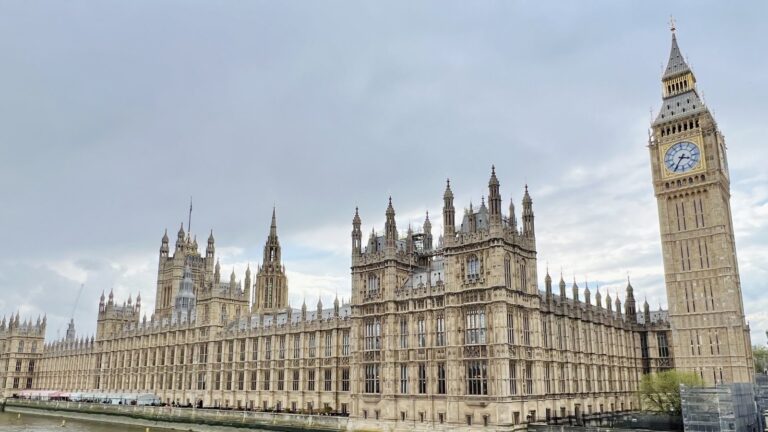
If you've been threatened with a lawsuit for speaking up about abuse or wrongdoing, this bill is about you. On November 27, the UK government backed Sir John Whittingdale's anti-SLAPP bill as MPs debated it in the Commons.
 Pastora Tori Matthews
People who speak up about abuse, corruption or wrongdoing could get a faster way out of the lawsuits meant to silence them, under an anti-SLAPP bill the UK government now backs. On Friday, November 27, the Ministry of Justice said it supports Sir John Whittingdale’s bill, which would let judges throw out abusive claims early and protect defendants from crippling legal costs.
SLAPPs, short for strategic lawsuits against public participation, are claims used to intimidate or exhaust the people they target. The UK’s current anti-SLAPP protections cover only cases tied to economic crime. This bill would extend them to all public-interest speech, from investigations into corruption to survivors speaking out about sexual abuse, and MPs began debating it in the House of Commons on Friday morning.
 News · 26 Nov 2026UK to Make Stalking a Standalone Crime Carrying Up to 10 YearsIf someone is stalking you in England or Wales, the law may soon stop asking how frightened you are. The UK says stalking will become a standalone…
 News · 25 Nov 2026Judge Blocks FCC's Early Review of ABC Licenses as Likely RetaliationIf the government can put a broadcaster's license on trial over what it airs, every viewer loses. A federal judge blocked the FCC's early license…
 News · 25 Nov 2026Appeals Court Says Arizona Judges Can't Bar Reports From Open CourtIf you ever speak aloud in an open Arizona courtroom, what you say can be reported. On November 24, the state's Court of Appeals struck down a…
 News · 24 Nov 2026Judge Bars Enforcing the ICC Sanctions' Speech Ban Against AnyoneIf your research, briefs or events touch people named under the ICC sanctions, this ruling is about you. On November 23, a federal judge barred…
 News · 24 Nov 2026UK Rolls Out Domestic Abuse Protection Orders Across England and WalesVictims of domestic abuse in England and Wales will be able to ask the Family Court for protection without involving the police, and courts can order…
01
The anti-SLAPP bill at a glance
- The bill: The Strategic Litigation Against Public Participation (No. 2) Bill, sponsored by Sir John Whittingdale, MP for Maldon. Its text was published November 20.
- The backing: The Ministry of Justice said on November 27 that the government supports it.
- What it does: It sets a legal definition of a SLAPP, lets courts dismiss such claims early and gives defendants costs protection.
- Who it covers: All public-interest speech, where the 2023 anti-SLAPP law covers only economic crime.
- The criticism: The National Union of Journalists says the early dismissal process is “incredibly complex.”
- Where it stands: MPs began its Second Reading debate on November 27. Parliament’s record hadn’t shown a result at the time of writing.
02
What a SLAPP is, and why it works
The government describes SLAPPs as legal claims “intended to harass, intimidate or financially pressure individuals involved in public interest activity.” They often borrow ordinary causes of action. In a joint article for The Telegraph, courts minister Sarah Sackman and Whittingdale wrote that SLAPPs exploit defamation, privacy and data protection laws to wear their targets down.
The weapon is cost. “When someone with deep pockets threatens legal action, for ordinary people, the cost of defending themselves can be ruinous,” they wrote. They added that “a claim need never even reach a courtroom to achieve its purpose.” Sometimes a threatening letter on a major law firm’s headed paper is enough.
Whittingdale gave the House an example. He said the author Catherine Belton was sued by Russian oligarchs over her book “Putin’s People,” and her publisher spent £1.5 million defending it. The settlement required amendments, he said, because further action in Australia was likely to cost another £2.5 million.
03
Why the 2023 anti-SLAPP law went only so far
Parliament has acted before. The Economic Crime and Corporate Transparency Act 2023 brought in protections against SLAPPs linked to economic crime, The Telegraph reported, letting courts throw such claims out early and limit defendants’ costs. But it reached only cases like fraud.
Whittingdale told MPs the Economic Crime and Corporate Transparency Act is “narrowly drawn” and that there has been only one real successful use of it. His bill would repeal its anti-SLAPP provisions, sections 194 and 195, and replace them with one framework for every public-interest matter.
It’s not the first try. Whittingdale said a private member’s bill by Wayne David, then an MP, made good progress in the last Parliament until a general election was called. He said Baroness Stowell is bringing her own bill in the House of Lords, and that the two have worked together for a long time.
04
What the anti-SLAPP bill would change
The heart of the anti-SLAPP bill is a legal definition. Whittingdale told the House that a SLAPP is a claim seeking to restrict a defendant’s freedom of expression on a matter of public interest, through conduct intended to cause harm beyond what properly conducted litigation involves.
Under the 2023 Act, a court asks what the claimant actually intended. Whittingdale said this bill uses an objective test instead: how a reasonable person would view the claimant’s conduct. That keeps proving a SLAPP from becoming overly burdensome for defendants, he said.
He said the wider definition reaches allegations of sexual abuse, failed medical procedures, academic research and critical public reviews. The Telegraph reported that judges would weigh whether a claim was meant to cause disproportionate harm, deny free speech or exploit a power imbalance between the two sides.
05
How early dismissal would work
Early dismissal is the anti-SLAPP bill’s main tool. It requires the civil procedure rules to give courts a way to dispose of SLAPP claims quickly. Whittingdale said a claim could be struck out when three conditions are met.
- It falls within the bill’s definition of a SLAPP.
- The claimant fails to show the claim is more likely than not to succeed at trial.
- The public interest in dismissing the claim outweighs the public interest in letting it continue.
The government says early dismissal “is intended to prevent defendants being drawn into lengthy and costly proceedings.” Whittingdale said safeguards keep legitimate claims on track to trial. The bill also lets the Civil Procedure Rule Committee write the detailed rules, including how evidence is tested.
06
Costs protection: the money behind the threat
Early dismissal matters only if defendants can afford to ask for it. Under the anti-SLAPP bill, where a claim meets the definition of a SLAPP, a defendant who loses won’t have to pay the claimant’s legal costs unless their own conduct in the litigation warrants it, the government says.
Whittingdale said the bill requires the civil procedure rules to give defendants costs protection, because the threat of huge legal bills chills speech on its own. Courts could also order claimants to put up security for a defendant’s costs. And when a defendant is awarded costs, the court could assess them on the indemnity basis, which he said means claimants who misuse the process face meaningful consequences.
One more provision looks ahead. The anti-SLAPP bill lets the Lord Chancellor extend a similar framework to other courts or tribunals through secondary legislation, Whittingdale said, so claimants can’t simply sue somewhere else.
07
Who the government says the anti-SLAPP bill protects
“No one should be able to use their wealth or influence to silence legitimate scrutiny,” Sackman said in the government’s release. “SLAPPs are designed to intimidate and can prevent victims of abuse, whistleblowers, campaigners and journalists, from speaking out in the public interest.”
The government lists victims of abuse, campaigners, whistleblowers, journalists and academics among the people it means to protect. The Telegraph reported the anti-SLAPP bill would reach environmental campaigners and even customers who complained about poor service.
In their article, Sackman and Whittingdale wrote, “Someone exposing sexual harassment or abuse deserves protection from legal intimidation just as much as a journalist investigating dirty money.” Sackman said the bill would preserve “access to justice for genuine claims.” People still have a right to defend their reputations, the pair wrote.
08
Survivors told MPs what silence costs
On November 17, Parliament’s Justice Committee took evidence under a blunt title: “Is the law being used to silence victims and survivors?” Its chair, Catherine Atkinson, MP for Derby North, told the House on Friday that “the conclusion is clearly yes.”
She described two sisters, both survivors of sexual violence, who were sued by their alleged abuser to stop them speaking. One told the committee that being made the defendant is “an egregious reversal of reality.” The sisters also described women who can’t fight such suits because “they stand to lose everything,” Atkinson said.
Atkinson said the sisters’ research found that 47% of survivors facing SLAPPs who answered their survey had experienced suicidal thoughts. If that’s where you are today, you can call or text 988.
Atkinson welcomed the anti-SLAPP bill so that “these kind of abusive, silencing legal cases are thrown out of court early.” She asked Whittingdale and the minister to see how it could go further.
09
The Fayed allegations and 27 years of silence
The first example the bill’s backers cite is Mohamed Fayed, the former owner of Harrods. The Telegraph reported that he used SLAPPs to keep allegations of sexual abuse against him from becoming public while he was alive. More than 400 people have come forward since his death with accusations of sexual misconduct over a 30-year period, the paper reported.
Whittingdale told MPs that when the story was about to be published in Vanity Fair, Fayed “deployed the full range of legal action.” That led to 27 years in which the information was never published, he said, until investigative documentaries aired it. Fayed died before the accusations became public, and they remain allegations.
Whittingdale said he met some of Fayed’s accusers when they recently attended a meeting in Parliament. He said he was “immensely moved to listen to their account of what they had suffered.” For survivors, that’s the cost of a SLAPP that works: decades of carrying the truth alone.
10
What critics say about the anti-SLAPP bill
Not everyone thinks the anti-SLAPP bill goes far enough. On November 23, the National Union of Journalists welcomed its publication but said it needs crucial changes.
“Progress on legislation addressing the harm caused by SLAPPs is welcome,” said Laura Davison, the union’s general secretary. But “at present, the early dismissal process in the Bill is incredibly complex,” she said, and there “remains considerable risk that those targeted will continue to face appalling financial and emotional burdens.”
Whittingdale acknowledged the worry in the Commons. He said the UK Anti-SLAPP Coalition and the NUJ fear the three conditions could themselves deter defendants and let lawyers run up the very costs the bill is meant to prevent. He said he shares that concern in part, especially about the third condition. The minister has concerns about removing those hurdles, he said, and he hopes talks continue in committee.
11
What the anti-SLAPP bill leaves untouched
Whittingdale was candid about the limits: “it will not mean the end of SLAPPs, but it will represent a major step forward.” He named two gaps. One is the extraordinary fees some law firms charge, which defendants can’t hope to match. The other is law firms taking on clients plainly trying to shut down free speech.
That second gap belongs to the Solicitors Regulation Authority, he said, and the minister is in talks with it. He also flagged concern about a recent High Court ruling that stops the regulator from requiring legally privileged documents.
On Thursday, the regulator warned that misuse of litigation, improper threats and SLAPPs can be serious misconduct that “may give rise to enforcement action by the Solicitors Regulation Authority,” Atkinson told the House. Separately, the government says that from January, non-disclosure agreements can’t be used to silence victims of crime or people harassed at work.
12
What happened in the Commons on Friday
Whittingdale moved the Second Reading at 9:34 AM London time. He said he’d entered the ballot for private members’ bills every year for 34 years, and this was the first time he’d had the chance to move a Second Reading. MPs from across the House spoke, including Justice Committee chair Catherine Atkinson.
The government’s release said the anti-SLAPP bill “received its Second Reading” on November 27. Parliament’s own record is the authority. As of 5:00 AM Pacific time (1:00 PM in London), the bill record listed the Second Reading for November 27 with no result, and the Hansard record showed the debate still under way. Bloom will report the outcome once Parliament records it.
13
How Washington and Oregon handle SLAPPs
If you live in the Pacific Northwest, you already have anti-SLAPP protection, and it’s worth knowing. Washington’s anti-SLAPP law, the Uniform Public Expression Protection Act, chapter 4.105 RCW, passed in 2021, covers claims based on speech on a matter of public concern and on statements in government proceedings. A defendant can file a special motion for expedited relief within 60 days of being served, after 14 days’ written notice.
Filing that notice or motion pauses the case, including discovery, between the two parties. The court must hear the motion within 60 days and rule within 60 days after that. A defendant who wins gets court costs, reasonable attorneys’ fees and litigation expenses. The law doesn’t apply to a claim against a perpetrator in a civil suit brought by a crime victim, so a perpetrator can’t use it to throw out a survivor’s suit.
Oregon’s anti-SLAPP law, a special motion to strike under ORS 31.150, covers statements in public proceedings and speech on issues of public interest. It also expressly covers a statement about a sexual assault made in good faith with an objectively reasonable belief that it happened. In a defamation suit over such a statement, the plaintiff must also show the speaker probably acted with malice.
The Oregon motion must be filed within 60 days of service, and discovery is stayed. A defendant who wins “shall be awarded reasonable attorney fees and costs,” the companion statute, ORS 31.152, says. The UK bill starts from a different place: a defendant who loses a SLAPP claim wouldn’t have to pay the claimant’s costs, and one awarded costs could recover them on the indemnity basis.
14
Silence is not peace
There’s a lie some powerful people tell: if no one hears about it, nothing happened. A SLAPP turns that lie into a business plan. It doesn’t need to win. It needs the person who spoke up to run out of money, strength or hope first.
That’s why this anti-SLAPP bill matters beyond Britain. In their article, Sackman and Whittingdale wrote that “the law should be a shield for those seeking justice, not a sword for the powerful to wield against them.” Any honest legal system should want that.
If you’ve been silenced by a letter, a lawsuit or a fear you can’t name, hear this: your truth didn’t become a lie because someone paid to bury it. You’re not the aggressor for telling it. And you’re not alone.
15
Timeline: the road to the anti-SLAPP bill
- 2010: As a select committee chair, Whittingdale first encounters the problem in a report on press standards, privacy and libel.
- 2023: The Economic Crime and Corporate Transparency Act brings in anti-SLAPP protections for economic-crime cases only.
- June 17, 2026: Parliament’s record lists the bill’s first reading in the Commons.
- September 2026: MPs hear in a Commons debate that no part of society is immune from SLAPPs, Sackman and Whittingdale wrote.
- November 17, 2026: The Justice Committee takes evidence on whether the law is used to silence victims and survivors.
- November 20, 2026: The anti-SLAPP bill’s text is published as Bill 018 of the 2026-27 session.
- November 23, 2026: The NUJ welcomes the bill but calls early dismissal “incredibly complex.”
- November 24, 2026: The bill’s explanatory notes are published.
- November 26, 2026: Sackman and Whittingdale make their case in The Telegraph.
- November 27, 2026: The government announces its backing, and Second Reading begins at 9:34 AM London time.
16
What happens next
If the Commons gives the anti-SLAPP bill its Second Reading, it moves to committee, where amendments can be made. Whittingdale said he hopes to keep discussing improvements there, including the concerns about the three conditions. The NUJ says it will work with its parliamentary group and MPs on the bill.
The bill would still face further stages in Parliament before it could become law. Much would then depend on the detailed rules the Civil Procedure Rule Committee writes. Bloom will keep following the anti-SLAPP bill and report its next stage.
17
What you can do if you’re threatened for speaking up
These steps aren’t legal advice. They’re a starting point.
- Don’t answer a legal letter alone. Get advice from a lawyer, a legal clinic or, for journalists, your union, before you reply or delete anything.
- Keep every record. Save letters, emails and messages, with dates, somewhere safe.
- Watch the clock. In Washington and Oregon, the anti-SLAPP motion generally has to be filed within 60 days of being served, so tell a lawyer right away.
- Follow the UK anti-SLAPP bill. Parliament’s bill page lists each stage as it happens.
- Tell your representative what you think. UK readers can write to their MP while the bill is in committee.
- Protect your peace. A legal threat is designed to wear you down. Rest, lean on people you trust and reach for help.
18
Where to get help
If this story brings back what someone did to you, or what someone did to keep you quiet, you don’t have to carry it alone.
RAINN’s National Sexual Assault Hotline answers at 800-656-4673. If you’re in crisis, you can call or text 988. Bloom’s crisis support page lists more people to call, and Bloom’s support groups are there if you’d rather talk with people who understand.
Bloom has also reported on the UK’s plan to make stalking a standalone crime and the rollout of domestic abuse protection orders across England and Wales. In the U.S., a federal judge blocked the FCC’s early review of ABC licenses as likely retaliation, and an Arizona appeals court said judges can’t bar reports from open court.
19
What Bloom is doing
We’ll follow the anti-SLAPP bill through committee and tell you what changes for survivors, whistleblowers and reporters. I believe a survivor’s voice belongs to the survivor, and no one should be able to buy it back with a lawyer’s letter.
Faith in Bloom offers pastoral care with no condition attached.
Independent reporting can be a target, too. A monthly gift keeps this work steady, and a one-time gift helps too.
20
Frequently Asked Questions
A strategic lawsuit against public participation is a legal claim meant to harass, intimidate or financially pressure someone speaking on a matter of public interest. It often uses defamation, privacy or data protection law.
It would set a legal definition of a SLAPP, let courts dismiss such claims early and protect defendants from paying the claimant’s costs. It would cover all public-interest speech, not just economic crime.
Sir John Whittingdale, MP for Maldon, sponsors it as a private member’s bill. The government said on November 27 that it backs the bill.
The National Union of Journalists says the early dismissal process is “incredibly complex.” Whittingdale said he shares some of that concern and hopes to address it in committee.
No. MPs began its Second Reading debate on November 27, and it would face further stages in Parliament before it could become law.
Yes. Washington has the Uniform Public Expression Protection Act, chapter 4.105 RCW, and Oregon has a special motion to strike under ORS 31.150. Both generally require the motion within 60 days of service.
Sovereignty over Servitude. 🌸
Support this work
Everything Bloom publishes is free to read and free to share.
Bloom Ministries is a registered 501(c)(3) in Salem, Oregon. Monthly giving is what lets us say yes before the money is in hand.
Keep reading
 Virginia Legislature · 27 November 2026Fourth Circuit Upholds Fairfax Title IX Verdict but Splits on Notice
 Justice for survivors · 26 November 2026Belize’s Domestic Violence Law Now Covers Dating and Ex-Partners
 Justice for survivors · 26 November 2026Domestic Violence Killed at Least 1,186 Women in Russia, Report Finds
