

Newsroom·Trans advocacy·News
Supreme Court of Canada Upholds Bill 21’s Religious Symbols Ban
Quebec can keep barring teachers, police officers and others from wearing a hijab, turban or kippah at work after Canada's Supreme Court upheld Bill 21 on November 27.
 Pastora Tori Matthews
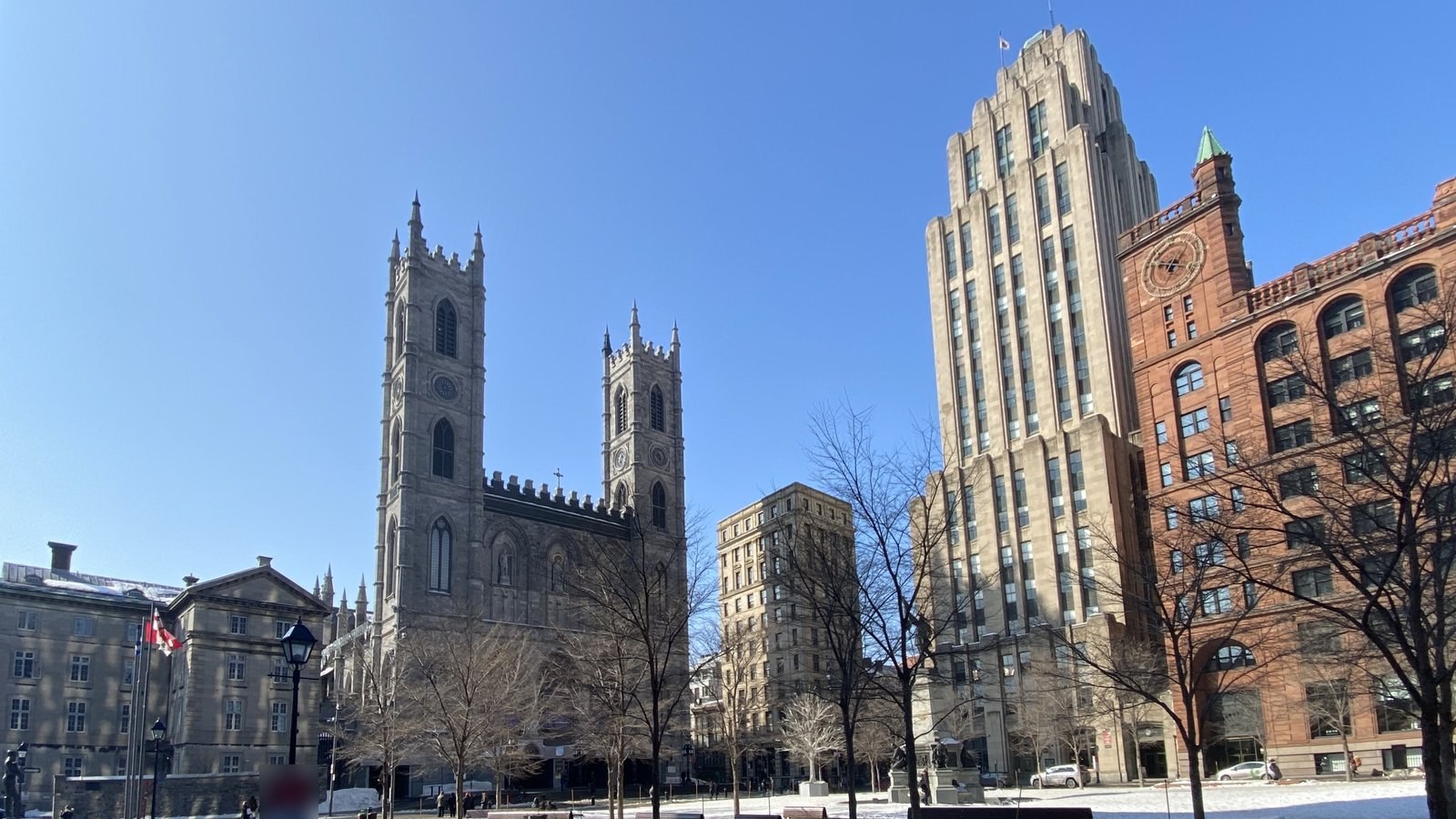
Faith and public life share the same square in Old Montreal.
Quebec can keep barring teachers, police officers, judges and other public employees from wearing a hijab, a turban, a kippah or a crucifix at work. On Friday, November 27, the Supreme Court of Canada upheld Bill 21, Quebec’s Act respecting the laicity of the State, except for one provision as it applies to members of the National Assembly.
The ruling, English Montreal School Board versus Quebec (Attorney General), 2026 SCC 41, confirms that a legislature can use the notwithstanding clause in advance to shield a law from key Charter rights. But a majority of the court also held that judges can still declare when such a law is inconsistent with the Charter. That answer reaches every Canadian, not only people of faith in Quebec.
 News · 25 Nov 2026B.C. Removes SOGI 123 Resources and Moves to Pull Them From SchoolsBritish Columbia is taking SOGI 123, the resources teachers have used for a decade to make schools safer for LGBTQ students, out of its classrooms.…
 News · 23 Nov 2026Crosspoint Church Asks Supreme Court to Strike Maine's Tuition RuleMaine says private schools paid with public tuition can't turn students away over religion, sexual orientation or gender identity. Crosspoint Church…
 News · 21 Nov 2026India's Top Court Orders Delhi to Drop Gender From Teacher Job AdsTransgender people seeking Delhi government teaching jobs can apply to any post and be judged on merit, and gender-specific notices still open must…
 News · 20 Nov 2026Survivors Ask Supreme Court: Who Decides What Clergy Must Report?Arizona's top court ruled that judges and juries generally can't second-guess clergy who keep an abuse disclosure confidential under their church's…
01
The Bill 21 ruling at a glance
- The decision: The Supreme Court of Canada dismissed the appeals of the English Montreal School Board and other parties, and dismissed Quebec’s cross-appeal.
- The notwithstanding clause: Six of seven justices held that Quebec validly used the override clauses when it enacted Bill 21.
- Declarations: Four of seven held that using the override doesn’t stop a court from declaring a law inconsistent with the Charter. The court made no such declaration in this case.
- Section 28: The guarantee of equal rights for men and women can’t, on its own, be used to strike down Bill 21.
- Section 23: Bill 21 doesn’t infringe the education rights of Quebec’s English-speaking minority, the court held.
- The exception: Section 8 of Bill 21 infringes democratic rights as it applies to members of the National Assembly. All seven justices agreed.
02
What Bill 21 does
Quebec adopted the Act respecting the laicity of the State on June 16, 2019, the Supreme Court’s Case Pre-Brief says. The law declares that Quebec’s secularism rests on four principles: separation of state and religions, religious neutrality of the state, equality of all citizens, and freedom of conscience and religion.
In practice, Bill 21 bars public school teachers, police officers, government lawyers and other officials from wearing religious symbols while they carry out their duties. CBC News lists what that means: hijabs, turbans, yarmulkes, crucifixes and Sikh kirpans. CityNews Montreal adds judges to the list.
The law also requires certain officials and service providers to do their jobs with their faces uncovered. People can be denied some public services, for security or identity reasons, unless their faces are uncovered too. A grandfather clause exempted people already employed before the bill was tabled, as long as they don’t change jobs.
03
What the court decided on the notwithstanding clause
The notwithstanding clause is section 33 of the Canadian Charter of Rights and Freedoms. It lets Parliament or a provincial legislature override the fundamental freedoms in section 2, the legal rights in sections 7 to 14 and the equality rights in section 15. Quebec invoked it pre-emptively when it adopted Bill 21, along with the override in section 52 of Quebec’s own Charter of human rights and freedoms.
The challengers argued that this pre-emptive use broke the architecture and spirit of the Constitution. The court disagreed. It held that Quebec “had validly used the power given to it by the override clauses,” according to the court’s Case in Brief.
To get there, the court read the text of section 33, its context, purpose and effects, and confirmed its 1988 decision in the Ford case. As a result, the summary says, the exercise of the override power “is not subject to any limit other than those expressly set out in the provision’s text.” Bill 21 also isn’t inconsistent with the constitutional architecture, the court concluded.
The override doesn’t last forever. It expires after five years unless a legislature re-enacts it, and Quebec renewed it in 2024, Al Jazeera reported.
04
Courts can still declare when rights are violated
A majority held that “the exercise of the override power does not prevent a court from making a declaration of inconsistency with the Charter provisions,” the Case in Brief says.
That power, the court said, comes from the separation of powers and the judiciary’s inherent jurisdiction to determine the legal effect of legislation and to grant a remedy. A declaration of inconsistency doesn’t strike a law down. CBC News described such rulings as non-binding: a court can explain which Charter rights a law violates while the law stays in force.
That narrow endorsement will make it easier for citizens to take on governments that use the notwithstanding clause, The Globe and Mail’s David Ebner wrote.
But the court didn’t make a declaration about Bill 21. “The Court has made no such declaration in this case,” its summary says.
05
How the justices divided
Seven justices heard the appeal. Justice Mahmud Jamal recused himself in July 2024, and Justice Mary Moreau sat out to avoid an even number of judges, CBC News reported.
The Case in Brief records a different majority on each key question:
- Quebec validly used the override: Chief Justice Richard Wagner and Justices Andromache Karakatsanis, Suzanne Côté, Malcolm Rowe, Nicholas Kasirer and Michelle O’Bonsawin. Justice Martin isn’t listed with them.
- Section 8 infringes section 3 for National Assembly members: all seven, Justice Martin included.
- Courts can make a declaration of inconsistency despite the override: Justices Karakatsanis, Kasirer, Martin and O’Bonsawin.
- No declaration in this case: Chief Justice Wagner and Justices Côté, Rowe and Martin.
Justice Martin is the only justice in both groups of four. She joined the majority saying courts can make a declaration, and the majority declining to make one about Bill 21.
The endorsement of declarations was 4-3, led by Justice Nicholas Kasirer, and the Chief Justice dissented on that issue, The Globe and Mail reported. The decision not to issue a declaration about Bill 21 was also 4-3, led by Chief Justice Wagner. The seven judges split into four camps, and the four judgments run to almost 140,000 words, the Globe reported.
06
Section 28 and equality between women and men
Many of the challengers’ hopes rested on section 28. It says Charter rights and freedoms apply equally to male and female persons, and it isn’t one of the sections the notwithstanding clause can override. Because the law disproportionately affects Muslim women, the challengers argued, it breaks that guarantee.
The court said no. Section 28 guides how the Charter’s other rights are understood and applied, but “it alone does not create a distinct right that could be invoked to challenge a law,” the Case in Brief says. Bill 21 can’t be invalidated because of section 28.
The decision says section 28 doesn’t establish “a standalone equality guarantee,” CBC News reported. It “cannot be invoked independently to ground a claim where a law or state action appears to be discriminatory against women or men,” the decision reads. And because Quebec invoked the clause, challengers couldn’t rely on section 15’s equality guarantee either.
07
English-language schools and section 23
The English Montreal School Board led the challenge. Section 23 protects the right of English-speaking and French-speaking minorities to have their children taught in their language and to help manage their schools. The clause can’t override it.
In 2021, the trial judge ruled that applying parts of Bill 21 to English-language schools violated section 23. The Quebec Court of Appeal reversed that in February 2024, saying the law concerns hiring, not the language or content of teaching.
The Supreme Court agreed with the Court of Appeal. It recognized that Bill 21 could limit English-language school boards’ ability to recruit, retain, transfer or promote certain people. But it found it “had not been demonstrated” that those limits undermine the linguistic or cultural interests section 23 protects.
08
The one part of Bill 21 that fell
Section 3 of the Charter protects every citizen’s right to vote and to run for a seat in a legislature. The notwithstanding clause can’t touch it.
All seven justices held that section 8 of Bill 21, the face-uncovering rule, infringes section 3 to the extent it applies to members of the National Assembly. Section 8 would keep a person elected to the Assembly whose religious beliefs require a face covering from sitting there and taking part in making laws, the Case in Brief explains. So Quebec can’t apply that rule to its own elected members, CBC News reported.
09
Inside the court’s reasons
“Bill 21 is rooted in Quebec’s legitimate and historical commitment to ensuring the laicity of the state in a free and democratic society,” Chief Justice Richard Wagner said in the judgment, CBC News reported.
The court also rejected the arguments that Bill 21 conflicts with certain pre-Confederation statutes or with the division of powers between Parliament and the provinces. A Quebec court found in 2021 that the law infringed the rights of people who wear religious symbols, Al Jazeera reported. That year, Quebec Superior Court Justice Marc-André Blanchard observed that the law forced “a cruel consequence that dehumanizes the people targeted,” The Globe and Mail reported, but he couldn’t strike it down because of the override.
This report relies on the court’s own Case in Brief and on news reports, because Bloom couldn’t yet open the full judgment.
10
The people who bear Bill 21’s weight
The law names no faith. But its weight hasn’t fallen evenly. “The overwhelming majority of people affected by Bill 21 and subsequent secularism laws are Muslim women who wear hijabs,” CBC’s Steve Rukavina wrote. Some teachers lost their jobs, he wrote, and people studying to teach abandoned that path.
In a 2022 and 2023 survey for a report by the National Council of Canadian Muslims and York University researcher Nadia Hasan, 73 percent of 411 Muslim women said Bill 21 had affected their job search, Al Jazeera reported. Forty-eight percent believed they didn’t get a job because of their religious identity, and 88 percent said Quebec had become a less welcoming place to live.
The council’s chief executive, Stephen Brown, said some women remove their hijabs at work and put them back on when they leave. Being made to choose between “your livelihood or your most deeply held convictions,” he told Al Jazeera, “was a dehumanising and cruel situation to inflict on people.”
Sikhs who wear the turban and Jewish people who wear the kippah face the same choice in the jobs Bill 21 covers. The World Sikh Organization was among the groups that challenged the law.
11
How Quebec expanded the religious symbols ban
Bill 21 was the beginning. In 2025, Bill 94 extended the ban on religious symbols to school support staff and volunteers, required students to keep their faces uncovered at school and barred prayer on school premises, Al Jazeera reported.
That’s how the ban reached Navien Waly, a Quebec mother who had volunteered at her children’s schools for a decade. She started wearing the hijab at 40, and then an email told her parents who wore religious symbols could no longer volunteer. “I’m the same person I was 10 years ago,” she told Al Jazeera.
This April, Bill 9 extended the ban on religious symbols to subsidized daycare workers and barred prayer spaces in public institutions, including universities, with some exceptions, CBC News reported. Quebec’s newly elected government has pledged to bar elementary students from wearing religious symbols, Al Jazeera reported. Friday’s ruling was about Bill 21, not those later laws.
12
What the Bill 21 ruling means beyond Quebec
The court interpreted section 33 itself, so its answer isn’t only about Quebec. Natasha Bakht, a University of Ottawa law professor, said the ruling “will also have consequences beyond Quebec, particularly for how the notwithstanding clause can be used across Canada,” Global News reported.
Alberta, Saskatchewan and Ontario told the court that letting judges weigh in on the clause’s use would run against its purpose and infringe “parliamentary sovereignty,” CBC News reported. On whether courts may still issue a declaration of inconsistency, the majority disagreed.
The federal government had asked the court to limit the clause, CityNews reported. Attorney General of Canada Sean Fraser argued that its repeated use amounts to “indirectly amending the Constitution.” On the limits, the court held that none exist beyond the text of section 33.
13
What it means for Alberta and Saskatchewan’s laws on trans people
Since 2019, Quebec, Ontario, Saskatchewan and Alberta have used the notwithstanding clause to shield laws from challenges, including laws restricting the rights of transgender people in Alberta and Saskatchewan, CityNews reported.
Alberta invoked the clause for three laws, Global News reported. They set rules for students who want to change their names or pronouns at school, ban transgender girls from amateur female sports and limit gender-affirming health care. Saskatchewan used it to stop children under 16 from changing their names or pronouns at school without a parent’s consent.
The court’s summary doesn’t mention those laws. But it settles two questions that matter for them. First, using the override is limited only by what section 33’s text says, and that reading of the clause isn’t limited to Quebec. Second, a court may still declare that a shielded law is inconsistent with the Charter. The ruling itself makes no declaration about any law outside Quebec.
The ruling also shows that rights outside section 33’s reach, like the democratic rights in section 3, still bind a legislature that uses the clause. That was the one place Bill 21 gave way. For trans people in those provinces, that means the courtroom door isn’t fully closed, but the path through it is narrow.
14
Freedom of conscience belongs to everyone
Bill 21 lists freedom of conscience and religion as one of the principles of Quebec’s secularism. Yet for a teacher who wears the hijab, the law asks her to set aside what her conscience requires in order to keep her classroom.
Freedom of conscience isn’t a permission slip a government hands out to the faiths it finds comfortable. It’s the inner room where a person answers to God and to their own heart, and a state that’s truly neutral leaves that room alone. A cross, a turban, a kippah and a hijab don’t make a teacher less able to teach.
The court has spoken on the law, and as Canada’s final court of appeal, its decision can’t be appealed to another court. But the court also said judges may still name a rights violation even when a legislature has shielded a law. Naming a wrong out loud is how a people’s conscience starts to change.
If you’re a person of faith in Quebec who has taken off a religious symbol to keep your job, you haven’t failed your faith. You’ve carried an impossible choice, and you aren’t alone in it.
15
Timeline: Bill 21 from Quebec’s legislature to the Supreme Court
- 1988: In the Ford case, the Supreme Court endorses governments’ mostly unfettered use of the override.
- June 16, 2019: Quebec adopts the Act respecting the laicity of the State, invoking both override clauses.
- October 2019: The English Montreal School Board challenges Bill 21 in Quebec Superior Court.
- April 20, 2021: Justice Marc-André Blanchard upholds most of Bill 21, with exceptions for National Assembly members and English-language schools.
- February 29, 2024: The Quebec Court of Appeal upholds the law and reverses the English-language schools exception.
- 2024: Quebec renews the notwithstanding clause for Bill 21.
- January 2025: The Supreme Court agrees to hear the appeals.
- March 23 to 26, 2026: The court hears the case, with 51 interveners, including six attorneys general.
- November 27, 2026: The Supreme Court upholds Bill 21, except section 8 as applied to National Assembly members.
16
What happens next
For teachers, police officers and other workers Bill 21 covers, nothing changes today. The ban on religious symbols stays in force.
The override must be re-enacted every five years to stay in effect, so Quebec’s legislature will face that choice again. Bill 94 and Bill 9, the later laws, weren’t before the court.
Across Canada, the declaration of inconsistency is now an open path. Lawyers for people affected by shielded laws can ask a court to say plainly that a law breaks the Charter, even if the law stands.
17
What you can do
- Read the court’s own summary. The Case in Brief explains the ruling in plain language and links to the full judgment.
- Know whether the grandfather clause covers you. If you held your post before Bill 21 was tabled, you may keep your religious symbol as long as you don’t change jobs. Ask your union or a lawyer before changing roles.
- Write down what happens to you. Note job offers lost, transfers refused or comments made, with dates.
- Talk to your elected members. The notwithstanding clause has to be renewed every five years. Your provincial member hears from you before that vote, not after.
- Stand beside your neighbors. Muslim, Sikh and Jewish coworkers and parents are living this. A word of welcome costs nothing.
18
Where to get help
If this ruling has shaken you, that’s a human response, and you don’t have to carry it alone. If you’re in crisis, you can call or text 988.
Trans people in Alberta, Saskatchewan or anywhere can reach Trans Lifeline at 877-565-8860. Bloom’s crisis support page lists more people to call.
Bloom has also reported on British Columbia removing SOGI 123 resources from schools and on a church’s petition to the United States Supreme Court.
19
What Bloom is doing
We’ll keep reading the full judgment and report what each set of reasons says about the notwithstanding clause and declarations of inconsistency. I believe a government that asks people of faith to choose between their conscience and their calling has asked too much, whatever a court allows.
Faith in Bloom offers pastoral care with no condition attached. The Bloom Charter is our global declaration on human dignity.
Careful reporting like this takes time, and a monthly gift keeps it steady. A one-time gift helps too.
20
Frequently Asked Questions
It upheld Bill 21 on November 27, 2026, except section 8 as it applies to members of Quebec’s National Assembly. Quebec can keep barring teachers, police officers and others it covers from wearing religious symbols at work.
A majority of four justices held that a court can still make a declaration of inconsistency with the Charter. The declaration doesn’t strike the law down, and the court made none about Bill 21.
No. It confirmed its 1988 Ford decision and held that the override isn’t subject to any limit beyond the text of section 33.
The court held that section 28 guides how other Charter rights are read, but doesn’t create a standalone right that could invalidate Bill 21.
The court’s summary doesn’t mention them. But its reading of section 33 applies to every legislature, and its holding on declarations of inconsistency is open to people affected by any shielded law.
You can call or text 988, and Trans Lifeline answers at 877-565-8860. Bloom’s crisis support page lists more help.
Sovereignty over Servitude. 🌸
Support this work
Everything Bloom publishes is free to read and free to share.
Bloom Ministries is a registered 501(c)(3) in Salem, Oregon. Monthly giving is what lets us say yes before the money is in hand.
Keep reading
 Trans advocacy · 27 November 2026Most LGBTIQ Youth in Portuguese Study Faced Violence or Bias at School
 Trans advocacy · 26 November 202617% of LGBTQIA+ People in the Netherlands Felt Discriminated Against
 California Legislature · 26 November 2026Ninth Circuit Misgenders Mona Murillo, Sends One Claim Back to Judge
